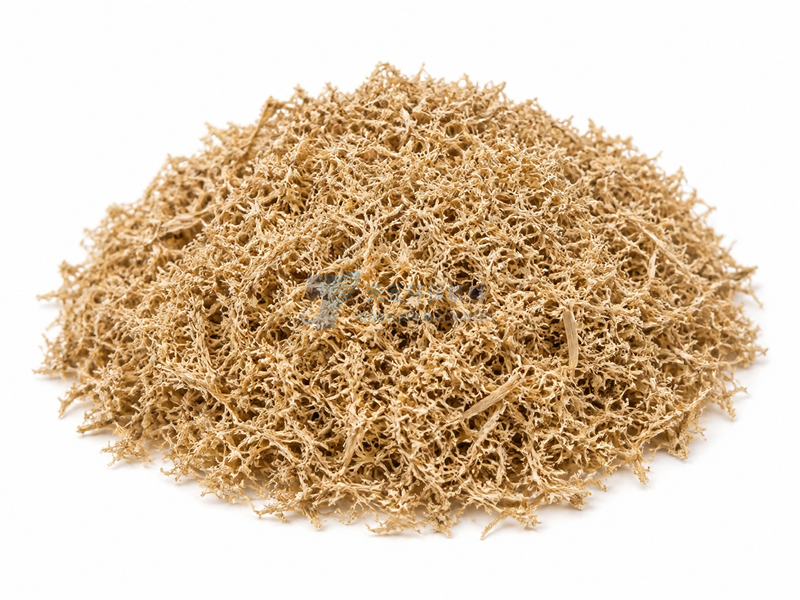
Wet wood grinding problems are not one single fault. Damp patches, changing moisture and unsuitable feed form can appear together, while a blocked outlet may have a mechanical cause unrelated to water. This guide concerns fine wood-flour production after necessary preparation, rather than the coarse reduction of fresh logs.
Wet or unevenly conditioned feed can contribute to interrupted feeding, unstable grinding and separation, and powder that misses the agreed specification. A symptom alone does not prove the cause. Check the affected stage and actual inlet material; stop and isolate the equipment before inspection, and resume only after the cause and approved operating conditions have been confirmed.
Contents
1. Define what “wet” means at the mill inlet
Record the batch, sampling point and moisture basis
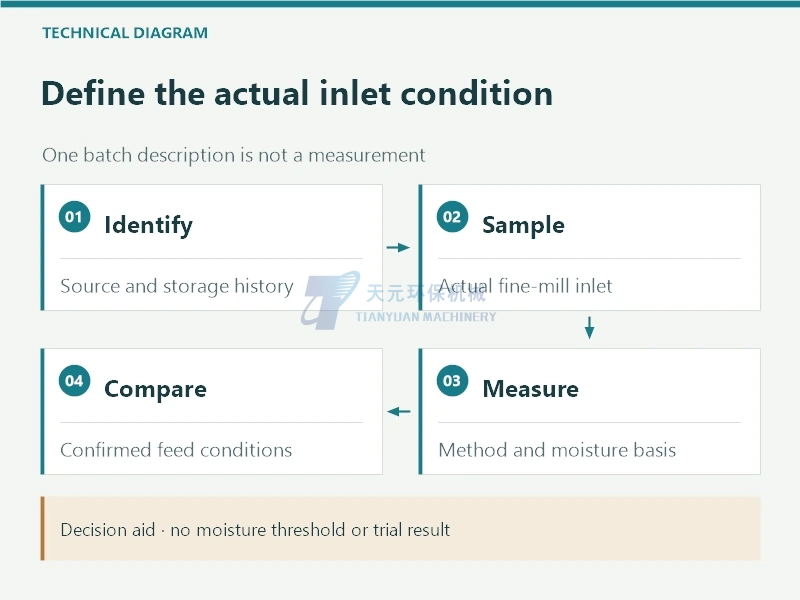
A description such as rain-wet chips, fresh shavings or damp sawdust is useful background, but it is not an inlet specification. Record source, storage exposure, preparation and sampling time. Take representative samples of the material actually reaching the fine mill; a dry surface or one convenient handful can hide variation within the lot.
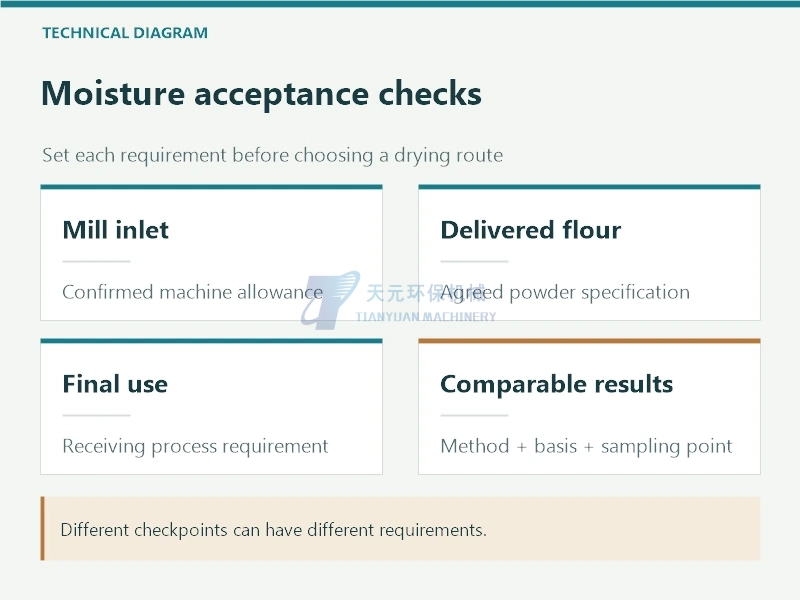
Report the moisture method and whether the result is on a wet or dry basis. Use the wood-moisture and grinding guide for that distinction. Compare the result with the confirmed conditions for the particular model and target powder. Acceptance by an upstream crusher does not establish acceptance by a fine mill; the two stages perform different jobs.
2. Locate the symptom before naming the cause
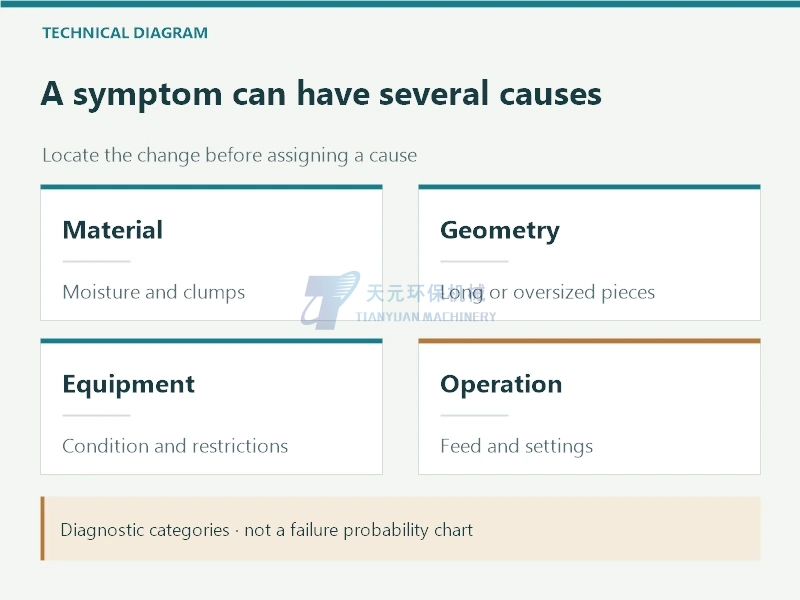
Record where flow first becomes irregular: storage discharge, feeder, mill outlet, separator or powder collection. Damp material may form clusters or adhere to surfaces, but oversized pieces, long fibres, foreign matter, restricted air paths and equipment condition also deserve investigation. Several causes can occur together.
Use the observations below as a diagnostic checklist, not as proof that every wet batch will behave this way. Compare the suspect batch with a retained acceptable batch under an approved test plan. Do not create a deliberately unsafe run to reproduce the fault, and do not bypass protective devices.
| Observed symptom | What to check | What it does not prove |
|---|---|---|
| Interrupted or surging feed | Inlet moisture distribution, clumps, complete particle dimensions and feeder condition | That moisture alone caused the interruption |
| Changing load or reduced accepted output | Feed rate, size, moisture, settings and the time basis | A fixed percentage loss in capacity |
| Deposits or irregular screen discharge | Safe inspection of surfaces, screen condition and sample state | That changing the screen will solve the cause |
| Variable powder or poor storage behaviour | Sampling, moisture, size distribution and packaging history | That passing one sieve makes the lot acceptable |
3. Assess grinding and energy on a comparable basis
Moisture can change how fibres deform and break, so the final particle shape and size distribution deserve measurement. Jiang and colleagues’ study used a vibratory ring-and-puck mill and found moisture-dependent particle characteristics. That supports checking material condition; it does not predict TYMF6R-600 performance or a universal moisture threshold.
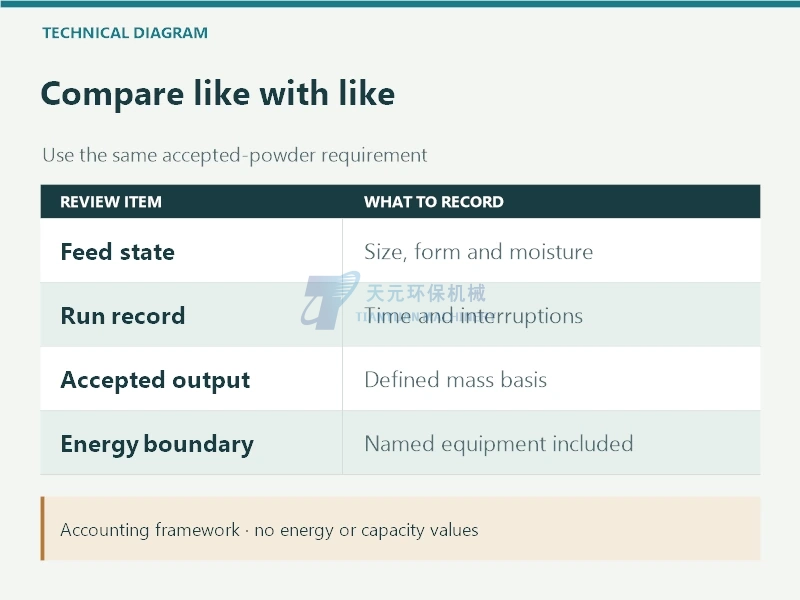
When comparing runs, hold the required powder specification and accounting boundary constant. Record total time, interruptions, input condition and accepted product, with moisture basis stated for mass comparisons. Include relevant auxiliary consumption if making a line-level energy comparison. A two-stage Douglas-fir study reports energy data for its own materials and equipment.
4. Check separation and product quality separately
Fine appearance is not a complete acceptance result
If a screen or classifier behaves differently, check both the unit and the material supplied to it after safe isolation. Damp clusters can make a sample appear coarser than its constituent particles; breaking clusters during sample preparation may change the result. State how the sample was prepared instead of quietly comparing unlike measurements.
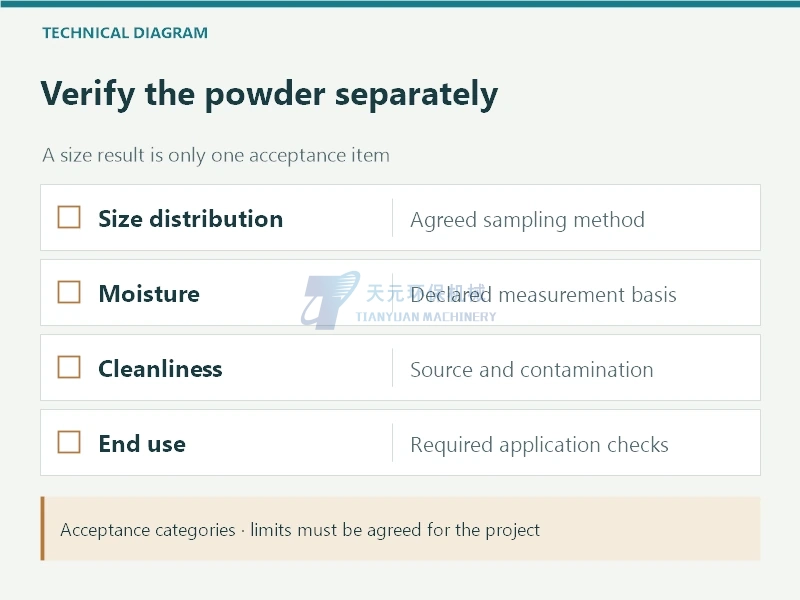
Agree the powder checks before the run: particle-size distribution, moisture, cleanliness and any application-specific colour or shape requirement. Record the sample location and time, and distinguish accepted powder from coarse return material or removed deposits. A powder that passes the particle-size check may still fail its moisture requirement. The wood-flour quality guide explains the wider acceptance framework.
5. Respond safely to blockage or abnormal operation
Follow the machine and site procedures for stopping, isolating energy and preventing unexpected restart before accessing a blockage. Do not reach into running equipment, defeat interlocks or treat repeated restarting as a diagnostic method. Escalate signs of overheating, smoke or other abnormal conditions through the site’s established response arrangements.
Wet feed does not remove the need for dust control: drying, milling and transfer can still produce fine dust. HSE guidance on wood dust supports capture at source, and OSHA’s woodworking fire guidance addresses combustible-dust hazards. These are general safety references, not a design approval for an installation; the actual collection and protection system requires competent assessment.
6. Define recovery and restart evidence
Keep the suspect lot identifiable. After the cause has been assessed, decide whether acceptable material needs controlled drying, other preparation or segregation. Drying alone does not establish that metal, coatings or treatment chemicals have been removed; suitability and cleanliness require separate confirmation. Recheck the actual inlet state after preparation and storage, rather than assuming that a completed drying step automatically approves the batch.
Before restart, confirm that the obstruction and its cause have been addressed, inspected components are fit for service, guards and protective functions are restored, and the feed meets confirmed conditions. Use an agreed grinding-test preparation and verification plan to check feeding and powder acceptance. Record observations and deviations; a brief smooth discharge is not evidence of sustained production capacity.
7. TYMF6R-600: published ranges and inlet moisture
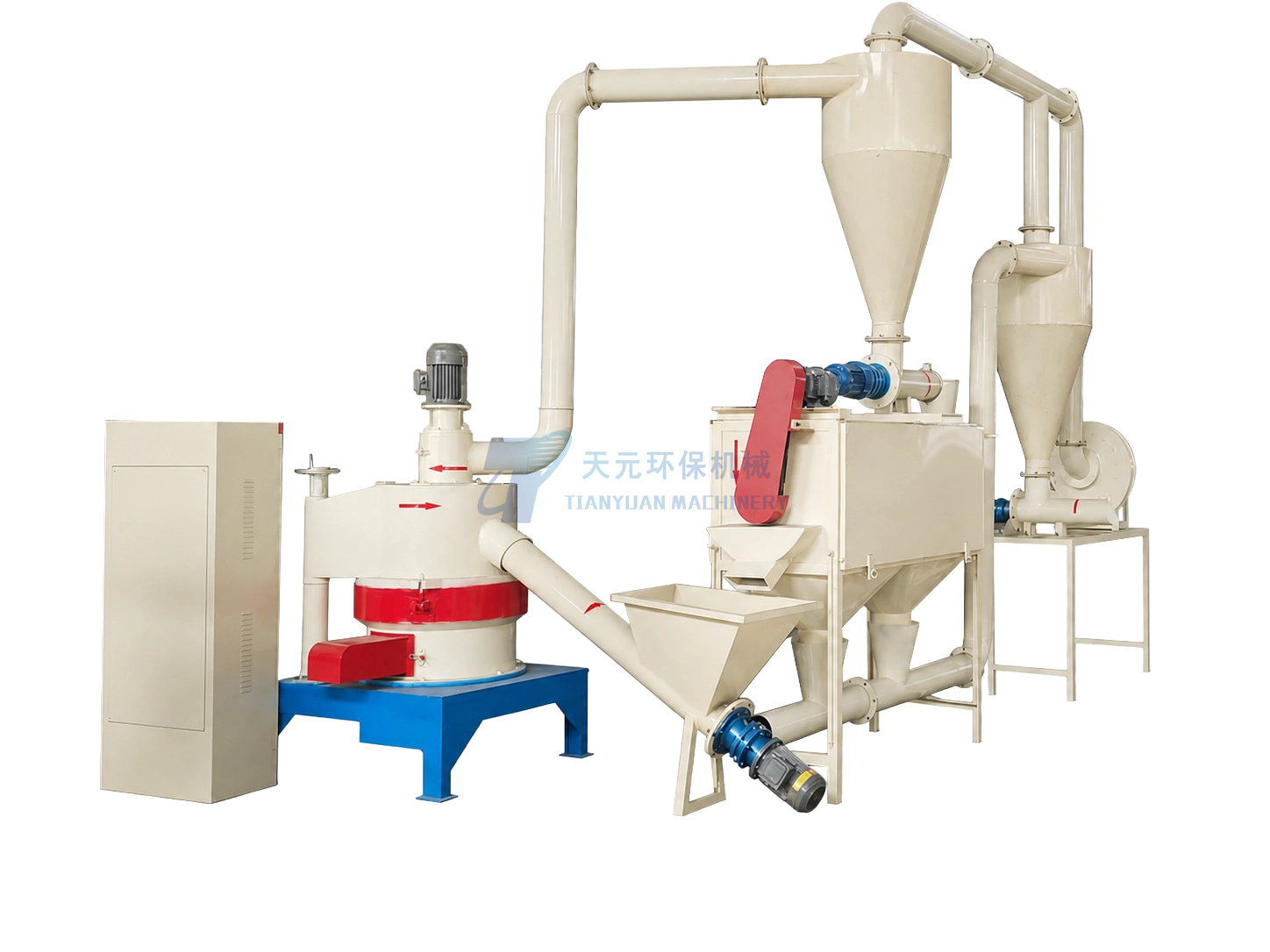
The TYMF6R-600 product page lists 30–325 mesh, 100–500 kg/h and a maximum feed diameter of 5 mm. These are published model ranges, not wet-wood trial results; the finest setting and highest output are not promised together. Long or flat pieces also need their complete dimensions and acceptable form checked.
Confirm the permitted inlet moisture, wet or dry basis and measurement method in the project technical documentation. A model acceptance boundary is not the optimum drying target for every wood type, fineness or application. TYMF6R-600 performs fine milling after necessary preparation; an upstream crusher accepting wet feed does not establish the same acceptance here.
Frequently asked questions
Does wet wood always block a powder mill?
No. Behaviour depends on the actual material, preparation, equipment and operating conditions. Blockage is a symptom to investigate, not proof of moisture as the sole cause.
Can I increase feed force or bypass a guard to clear the problem?
No. Follow the approved stopping and isolation procedure. Inspect and correct the cause before restoring normal operation; protective functions must remain effective.
Is every drop in output caused by water?
No. Check dimensions, feed consistency, settings, equipment condition and the definition of accepted output. Compare runs at the same required powder specification.
Does drying make a contaminated batch suitable?
Drying alone does not establish that metal, coatings or treatment chemicals have been removed. Material suitability and cleanliness require separate confirmation, independently of the moisture result.
What information should accompany a problem report?
Provide batch identity, inlet sampling and moisture method, complete dimensions, observed fault location, operating record and powder results. Include images taken safely after isolation when useful.
What to prepare next
Begin with the observed stage, not a guessed moisture limit. Identify and sample the actual feed, inspect safely, distinguish mechanical causes from material effects, and verify both restored operation and accepted powder. Send that evidence with the target specification to the technical team before selecting preparation steps or making a production commitment.