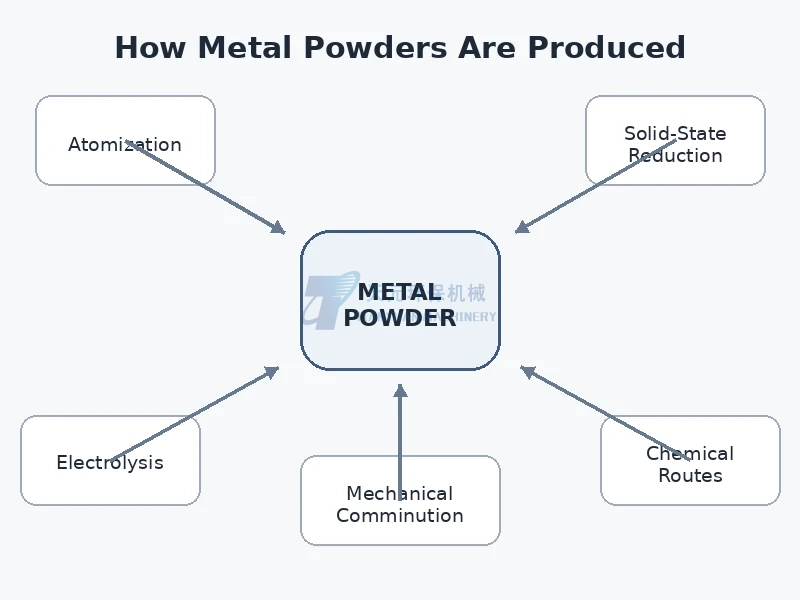
Metal powder is not produced by one universal process. Depending on the metal, the required particle shape, purity, particle-size distribution, production scale, and final application, manufacturers may use atomization, solid-state reduction, electrolysis, chemical processes, or mechanical comminution. Understanding these metal powder production methods is important because the production route largely determines the properties of the powder before it ever reaches a downstream process.
Key Conclusion
There is no single “best” method for producing metal powder. Atomization is widely used when molten metal can be converted into droplets and controlled particle morphology is important. Reduction and chemical routes are useful when powder is produced through a chemical transformation. Electrolysis can produce high-purity powders with distinctive particle structures. Mechanical comminution reduces solid metal by physical forces and is most suitable when the material behavior and feed condition allow effective fracture or size reduction. The correct route should therefore be selected from the required powder properties and the characteristics of the starting metal, not simply from the desired fineness.
Contents
Why the Production Route Matters
A metal powder is more than a collection of small metal particles. Two powders made from the same nominal metal can behave very differently if they were produced by different processes. Particle shape, surface roughness, internal porosity, oxide level, apparent density, flow behavior, compressibility, and particle-size distribution can all be influenced by the production route.
For example, a process that starts with molten metal and forms droplets can create a very different particle morphology from a process that breaks solid feedstock by impact or attrition. A chemical or electrolytic process may create porous, dendritic, or sponge-like particles that behave differently again. These differences matter in powder metallurgy, thermal spraying, additive manufacturing, sintering, pressing, chemical applications, conductive materials, and many other uses.
This is why the question “How fine can the powder be?” should not be the only question when evaluating metal powder production. A technically useful specification normally also considers what metal is being processed, the required particle morphology, acceptable contamination, oxidation sensitivity, downstream processing requirements, and whether a narrow or broad particle-size distribution is preferred.
Main Metal Powder Production Routes
Industrial metal powder production can be grouped into several major routes. The boundaries between categories vary slightly between textbooks and industry organizations, but the most common groups are atomization, reduction, electrolysis, chemical production, and mechanical size reduction.
Processes Starting from Molten or Chemical States
Atomization begins with molten metal and converts the melt into droplets that solidify as powder. Reduction and other chemical routes create metallic powder through chemical reactions. Electrolysis deposits metal from an electrolyte under controlled electrical conditions.
Processes Starting from Solid Metal
Mechanical comminution starts with solid feedstock and uses physical forces such as impact, attrition, shearing, or compression to reduce particle size. It does not automatically suit every metal because ductility, hardness, toughness, feed form, heat generation, and work hardening can strongly affect the grinding behavior.
Atomization
Atomization is one of the most important industrial methods of producing metal powders. A stream of molten metal is broken into small droplets, usually by high-energy gas or liquid jets, and the droplets cool and solidify before collection. Variants include gas atomization, water atomization, centrifugal atomization, plasma-based processes, and other specialized techniques.
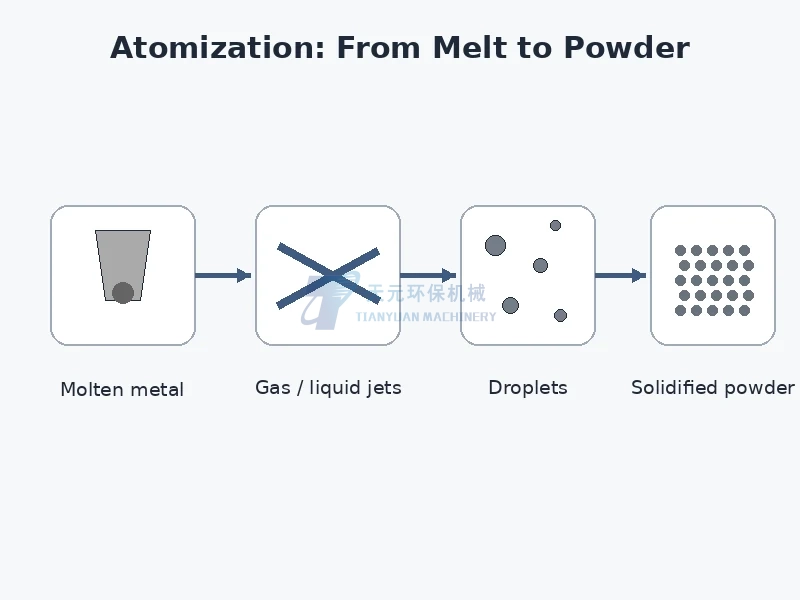
Gas atomization generally favors more rounded or spherical particles because the droplets solidify while moving through the atomization chamber. It is widely associated with powders that require good flowability or controlled morphology. Water atomization cools droplets rapidly and commonly produces more irregular particles. The exact result depends on alloy chemistry, melt temperature, atomizing medium, jet conditions, cooling rate, and downstream classification.
The important point is that atomization is not simply “grinding molten metal.” It is a fundamentally different production route. The metal first becomes a liquid, is divided into droplets, and then solidifies. This distinction becomes important when comparing atomized powders with mechanically milled powders, because their particle formation mechanisms are different.
Reduction and Chemical Routes
Solid-state reduction is a traditional route for producing certain metal powders. In a typical reduction process, an oxide or other metal-containing compound is chemically reduced to metallic form. The resulting product may then require crushing, separation, annealing, sieving, or additional conditioning before it becomes a finished powder.
Reduction routes can produce porous or sponge-like particles. Their usefulness comes from the relationship between the chemical reaction, the structure of the precursor material, and the properties needed in the finished powder. They are particularly important for metals and powder-metallurgy applications where compressibility, porosity, or specific chemical characteristics are valuable.
Other chemical production methods include precipitation from solution, thermal decomposition, and specialized processes such as carbonyl decomposition for suitable metals. These routes can offer close control of purity or particle characteristics, but the process must be matched to the chemistry of the material. A chemical method that is effective for one metal may have no practical relevance to another.
Electrolysis
Electrolytic powder production uses an electrochemical cell to deposit metal under controlled conditions. Electrolyte composition, current density, temperature, electrode conditions, and subsequent treatment influence the resulting powder. Depending on the process, the deposit may be removed, washed, dried, annealed, crushed, and classified before final use.
Electrolytic powders are often associated with high purity and characteristic dendritic or irregular particle structures. Copper is a well-known example, although electrochemical production can be applied to other metals under suitable conditions. The process is generally selected because of the powder properties it can provide, rather than simply because it can achieve a small particle size.
Mechanical Comminution and Milling
Mechanical comminution produces powder by physically reducing solid metal feedstock. The size-reduction mechanism may involve impact, attrition, compression, shearing, or combinations of these forces. Equipment and process design vary widely, and the response of the metal is a critical part of the result.
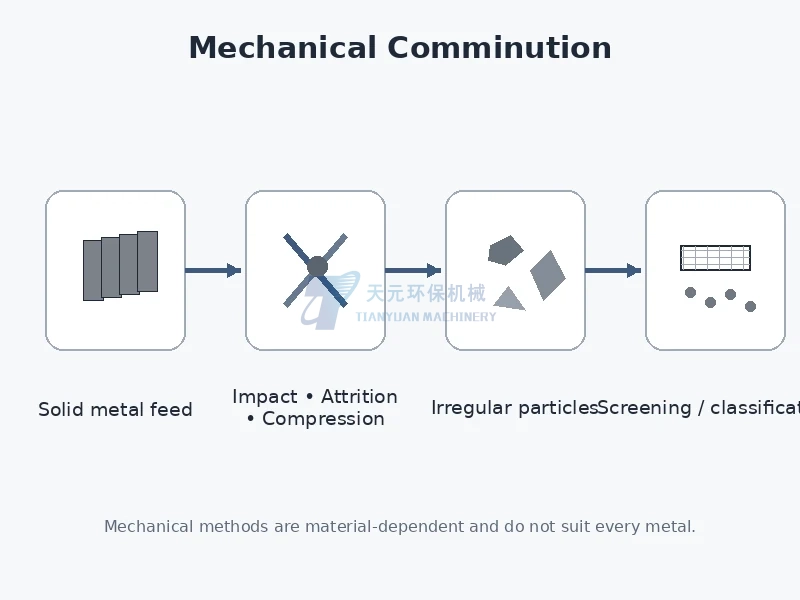
Brittle materials generally fracture more readily than highly ductile materials. Ductile metals may flatten, deform, smear, cold-weld, or work-harden instead of breaking cleanly. This is why mechanical metal powder production should never be described as a universal process for every metal. Feedstock condition can also change the result: chips, granules, flakes, pre-crushed pieces, and other forms may behave differently even when they have similar chemical composition.
Mechanical milling may also influence particle shape. Because particles are created by fracture and deformation rather than by the solidification of free droplets, irregular, angular, or flattened morphologies are common. Repeated size reduction may also broaden the particle-size distribution unless classification is incorporated into the process.
Another distinction is important: mechanical milling for particle-size reduction is not automatically the same as mechanical alloying. Mechanical alloying is a specialized high-energy process intended to repeatedly deform, fracture, and weld powder particles in order to create particular alloy structures or composite distributions. A conventional metal powder grinder designed for size reduction should not be described as a mechanical-alloying system unless that capability has actually been verified.
How to Select a Metal Powder Production Method
Choosing a production method begins with the final powder requirement rather than with the machine. A useful evaluation normally starts with the metal or alloy composition, physical form of the feedstock, required particle-size range, preferred particle morphology, purity requirement, oxidation sensitivity, downstream application, production scale, and safety characteristics.
If spherical particles and controlled flow behavior are critical, an atomization route may deserve consideration. If high purity and dendritic morphology are important, an electrolytic process may be appropriate for suitable metals. If a powder is most efficiently produced through reduction or decomposition of a precursor compound, a chemical route may be the logical choice. If the starting material is already solid and its mechanical behavior allows effective fracture or controlled size reduction, mechanical grinding can be evaluated.
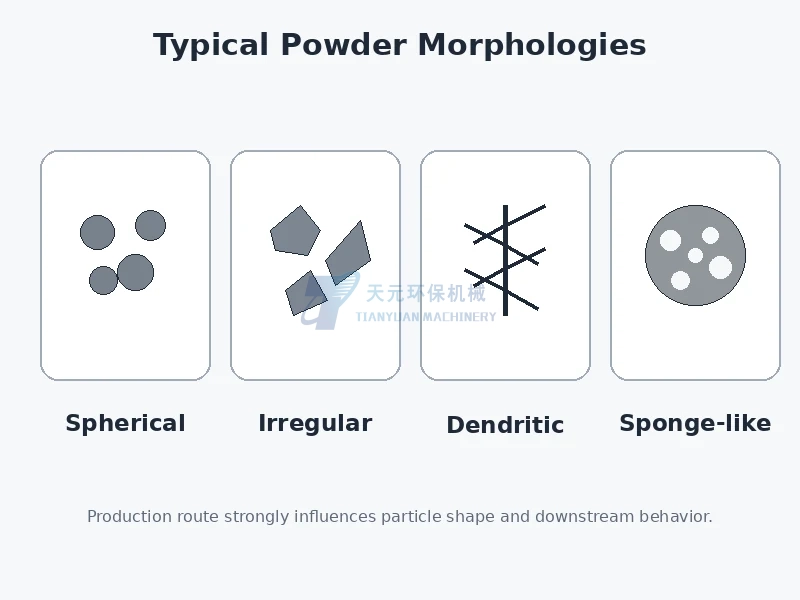
No selection should be made from particle size alone. Two powders with a similar nominal micron range can have very different flowability, packing behavior, oxidation tendency, apparent density, and processing performance because their shapes and surfaces are different.
Where Mechanical Grinding Fits—and Where It Does Not
For a manufacturer evaluating a metal grinding project, mechanical size reduction can be attractive when the starting material is compatible with the process and when an irregular mechanically produced powder is acceptable for the target use. Typical project evaluation should consider material type, feed form, hardness, ductility, moisture or contamination, target fineness, desired capacity, heat generation, dust collection, classification requirements, and the intended downstream use.
Mechanical grinding should not be treated as a substitute for every other metal powder production technology. It cannot automatically reproduce the spherical morphology of a suitable gas-atomized powder, the dendritic structure of an electrolytic powder, or the chemical purity profile of a specialized chemical process. The correct question is therefore not “Can grinding replace atomization?” but “Does the powder produced by mechanical grinding meet the requirements of this specific application?”
Safety assessment is also essential. Some finely divided metal powders can create fire or explosion hazards when dispersed in air, and the risk depends on the specific material, particle characteristics, concentration, ignition sources, equipment design, and operating conditions. Materials such as aluminum, magnesium, zinc, and some forms of iron powder require particular attention. A project involving combustible metal dust should therefore be reviewed by qualified safety professionals and should not rely on generic assumptions about dust collection or equipment configuration.
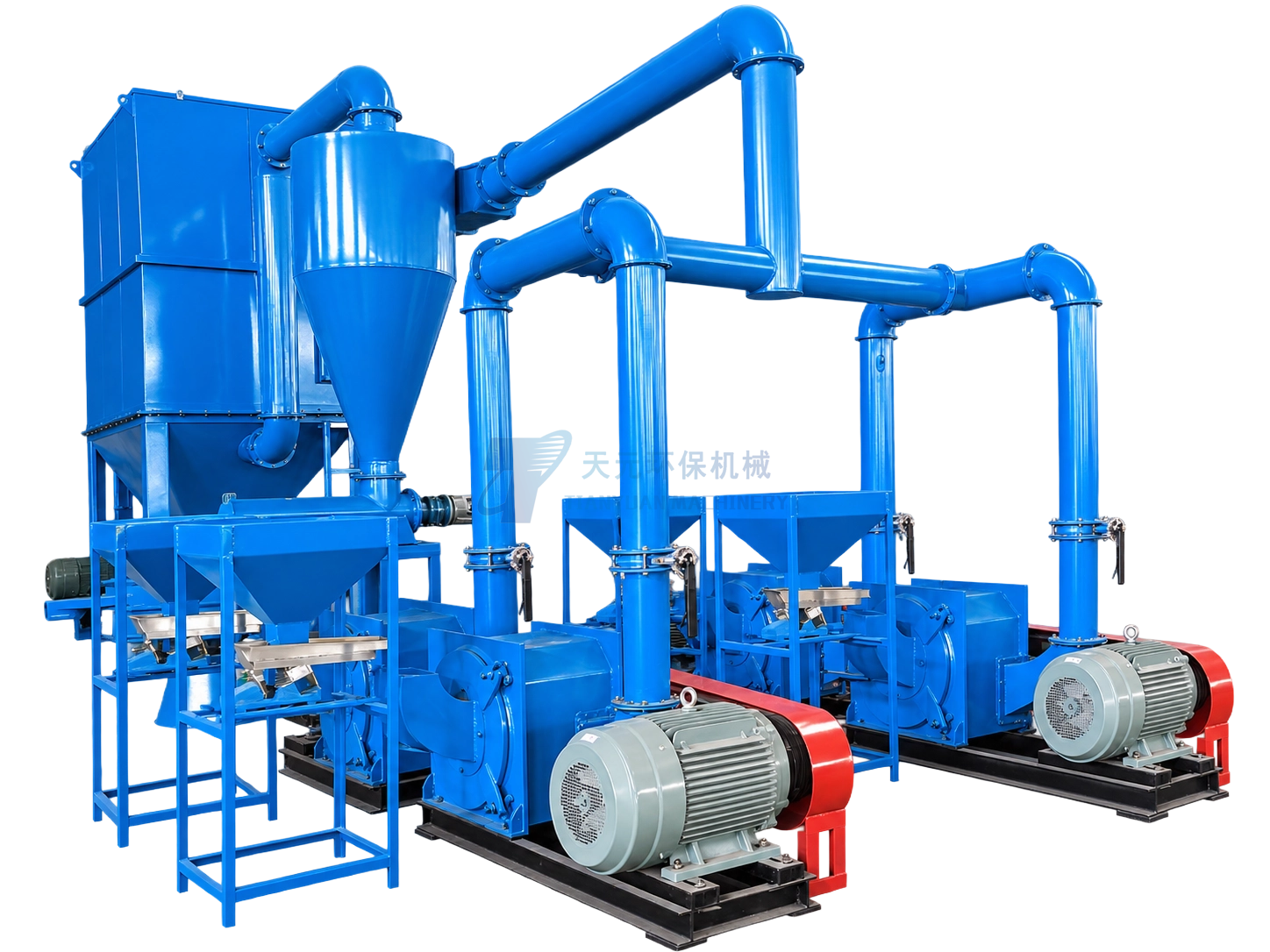
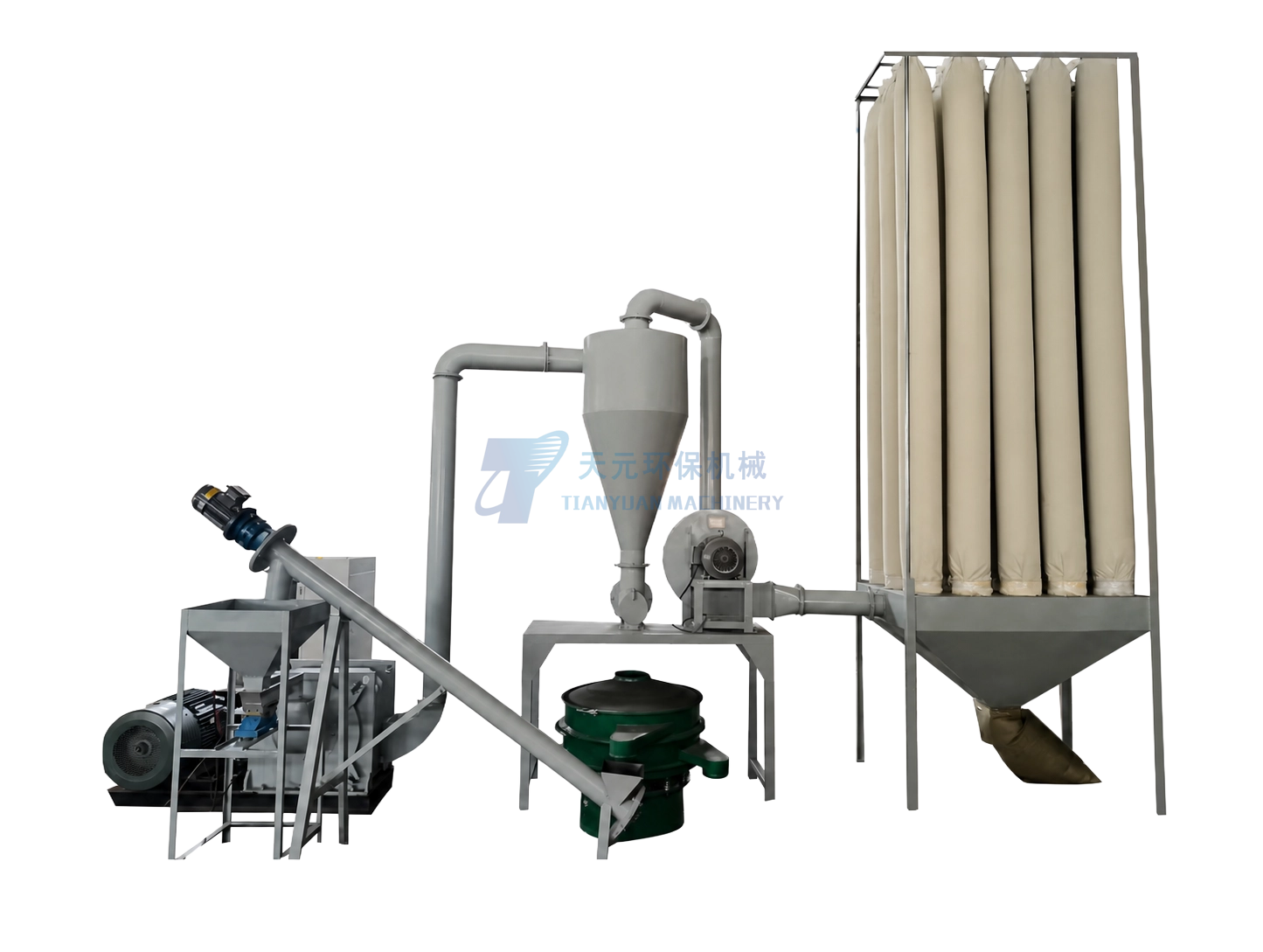
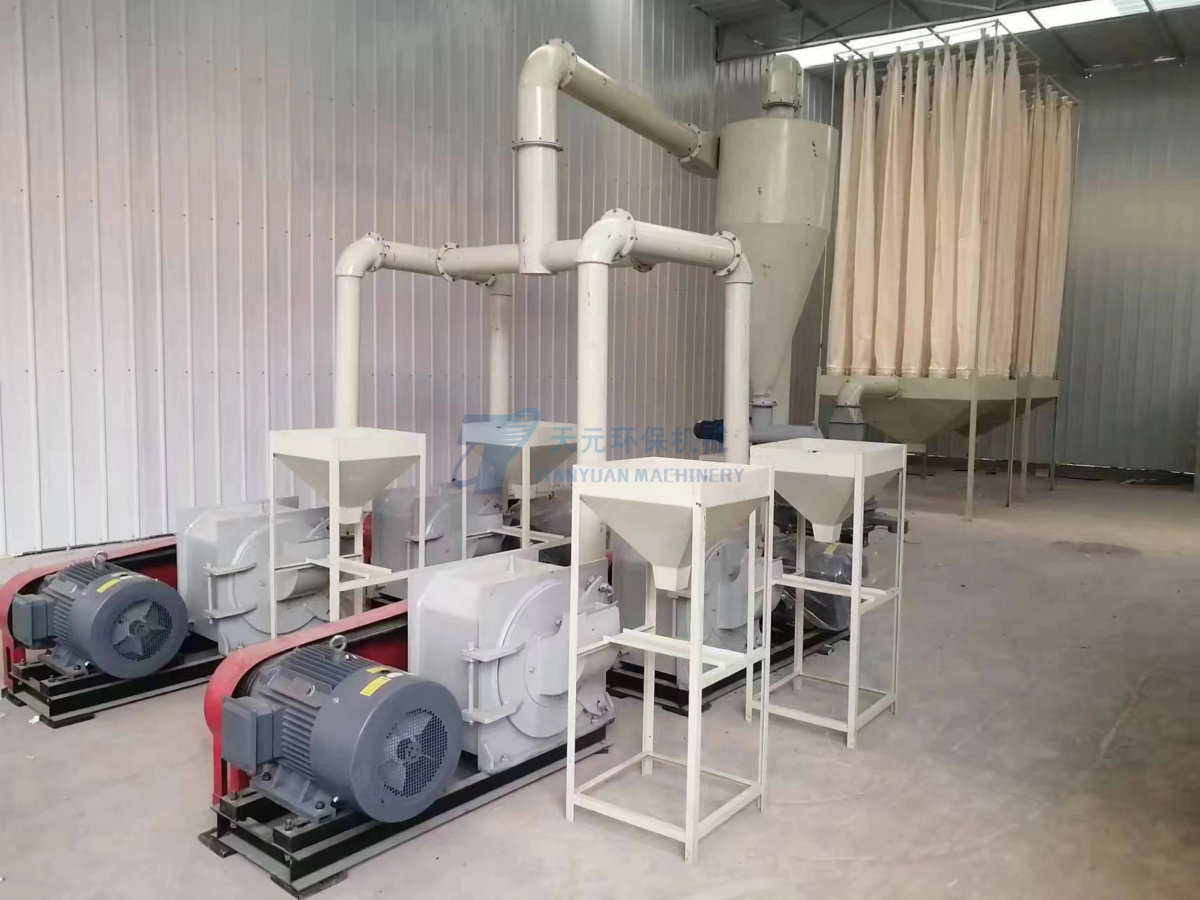
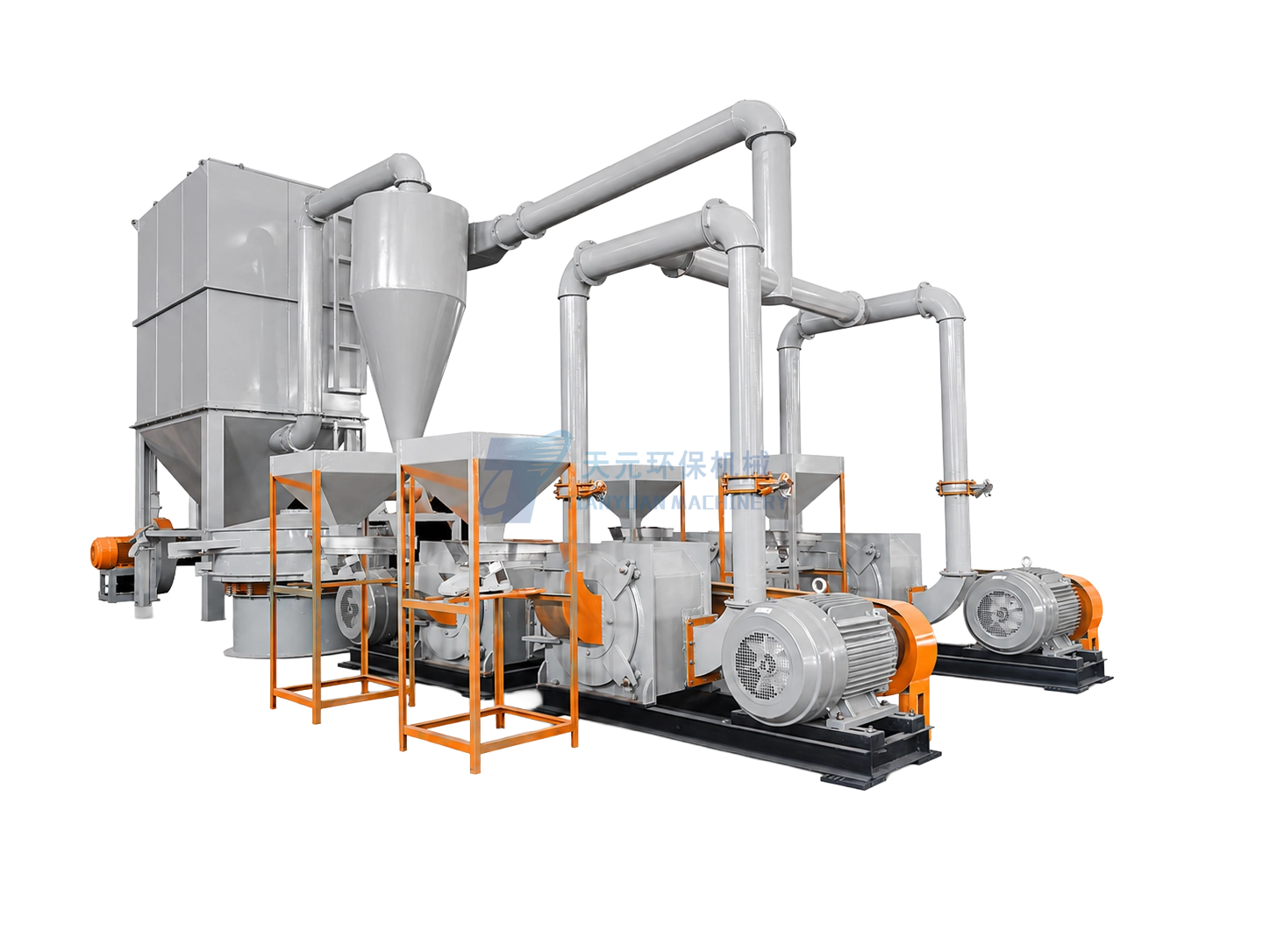
For suitable mechanical metal-powder projects, Tianyuan can evaluate the material and process requirement from the perspective of size reduction. A responsible evaluation begins with the actual metal, feed condition, target powder requirement, and operating constraints. When necessary, sample testing should be used to determine whether the material can be processed effectively before equipment selection is finalized.
Frequently Asked Questions
What are the main metal powder production methods?
The main industrial routes include atomization, solid-state reduction, electrolysis, chemical production, and mechanical comminution. Each route produces different particle characteristics and is suitable for different metals and applications.
Is atomization the same as mechanical grinding?
No. Atomization starts with molten metal and forms droplets that solidify into powder. Mechanical grinding starts with solid metal and reduces its size through physical forces such as impact, attrition, compression, or shearing.
Can every metal be mechanically ground into fine powder?
No. Grindability depends on hardness, brittleness, ductility, feed form, work hardening, heat generation, and other material characteristics. Highly ductile metals may deform instead of fracturing, so material-specific testing may be necessary.
Which process produces spherical metal powder?
Gas atomization and several specialized atomization processes are commonly used when spherical or near-spherical particles are desired. Actual morphology depends on the metal and process conditions.
Why is particle morphology important?
Particle morphology can influence flowability, packing, apparent density, surface area, oxidation behavior, compressibility, and downstream processing. Particle size alone does not fully describe a metal powder.
Conclusion
Metal powder production methods should be understood as different engineering routes rather than interchangeable ways of making the same product. Atomization, reduction, electrolysis, chemical production, and mechanical comminution create powders through different mechanisms, so they naturally produce different particle structures and processing characteristics.
When evaluating a metal powder project, begin with the metal, the required powder properties, and the downstream application. Mechanical grinding can be a practical route for suitable materials and suitable powder requirements, but it should be selected only after confirming the material’s behavior, process boundaries, and safety conditions.