Equipment labels in the wood industry can be misleading when translated directly into a purchase request. A grinder used to prepare forestry residues may have a very different product objective from a fine mill used to manufacture wood flour. The name crusher also covers different machine designs.
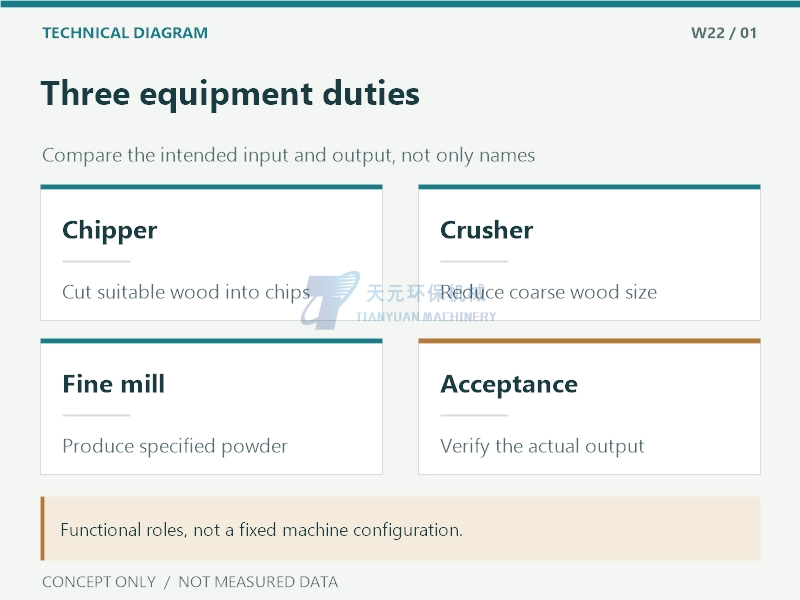
A wood chipper typically cuts larger wood into chips. A wood crusher typically performs coarse size reduction to produce smaller solids. In wood flour manufacture, a fine grinder or mill processes suitably prepared feed into a specified powder, although grinder can also mean coarse equipment in other industries. Compare confirmed feed, output and processing duty rather than relying on names alone.
Contents
Compare the three equipment duties
Function comes before literal translation
The OSHA sawmill equipment guide describes a chipper as a machine that cuts material into chips. Across the timber, forestry and powder industries, crushers and grinders may operate on quite different principles. No universal particle-size threshold follows from these words. For a wood flour project, their common duties can be compared as follows.
The table describes functional roles, not a mandatory line layout or a model guarantee. A machine marketed under one name may perform a different duty. What matters is its confirmed feed and output under the operating conditions relevant to the project.
| Equipment name | Common duty in this context | Typical output objective |
|---|---|---|
| Wood chipper | Cut larger suitable wood | Wood chips |
| Wood crusher | Coarse size reduction | Smaller fragments or fibrous solids |
| Wood grinder / fine mill | Mill appropriately prepared wood | Specified flour or powder |
A wood chipper makes chips
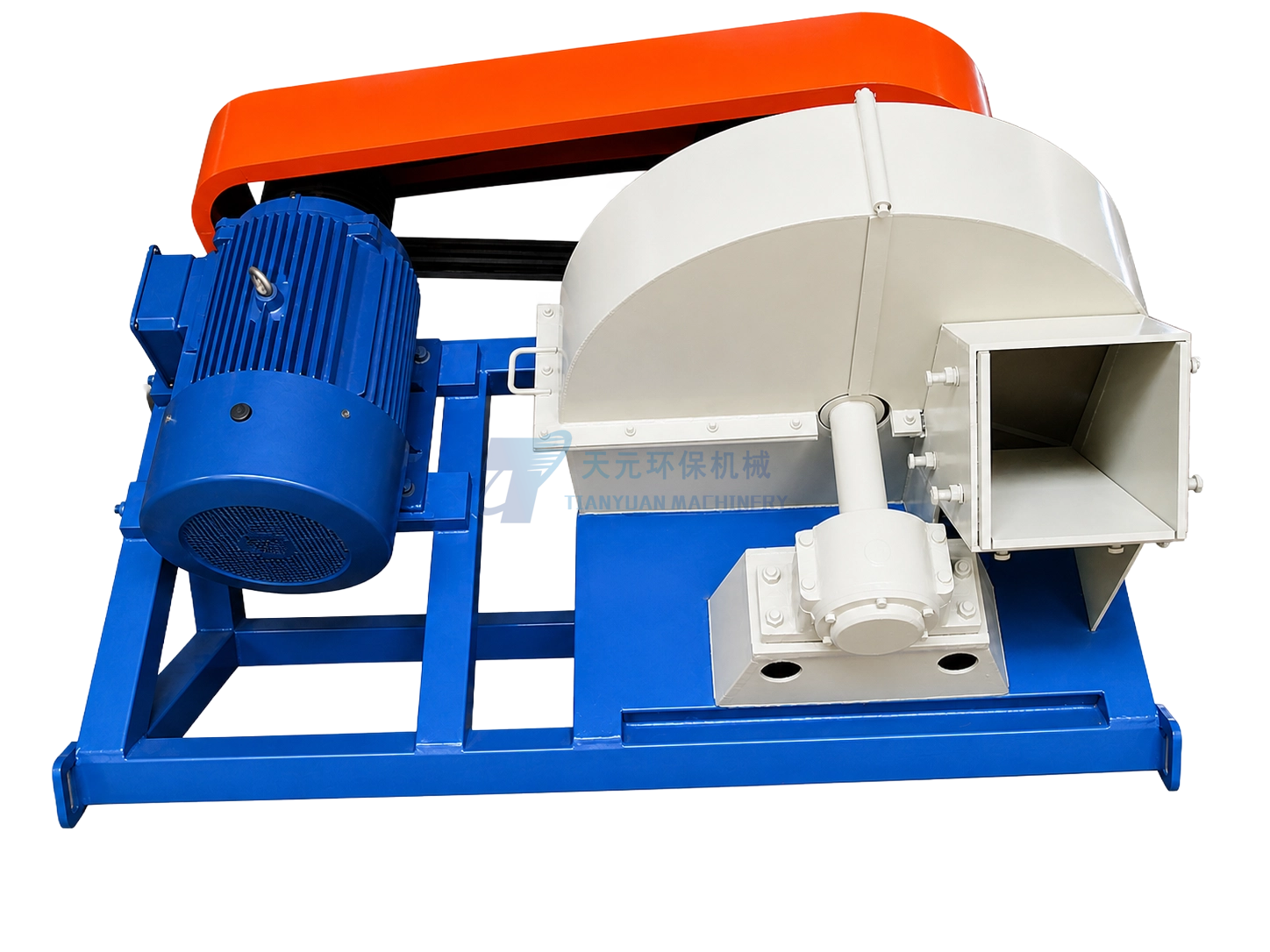
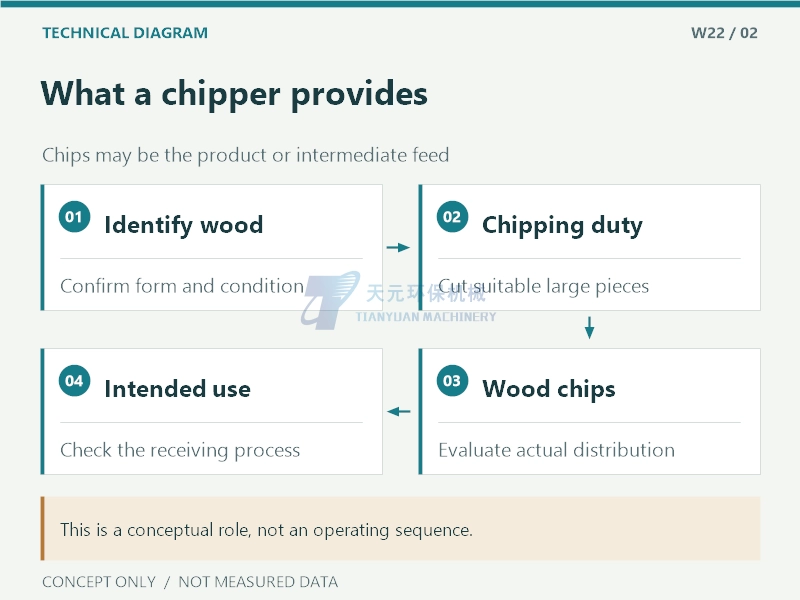
Chipping is primarily a cutting duty. Depending on equipment design and permissible feed, a chipper can convert suitable pieces of larger wood into chips with a size and shape distribution suited to their destination. Chips can be the intended product or an intermediate feed for another operation. The ability to make chips does not establish an ability to make fine wood flour.
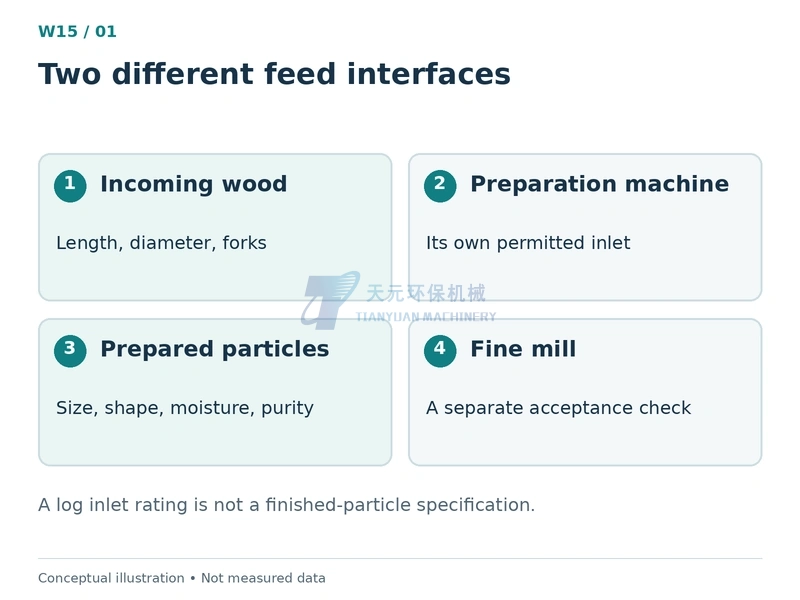
The USDA Forest Service report on biomass preprocessing distinguishes chipping from other size-reduction approaches in forestry. Its context is biomass handling, not a specification for a particular powder line. If logs, branches or offcuts are proposed, the supplier must confirm the permissible dimensions, shape, source condition and contaminant restrictions for the named model.
A wood crusher prepares smaller solid material
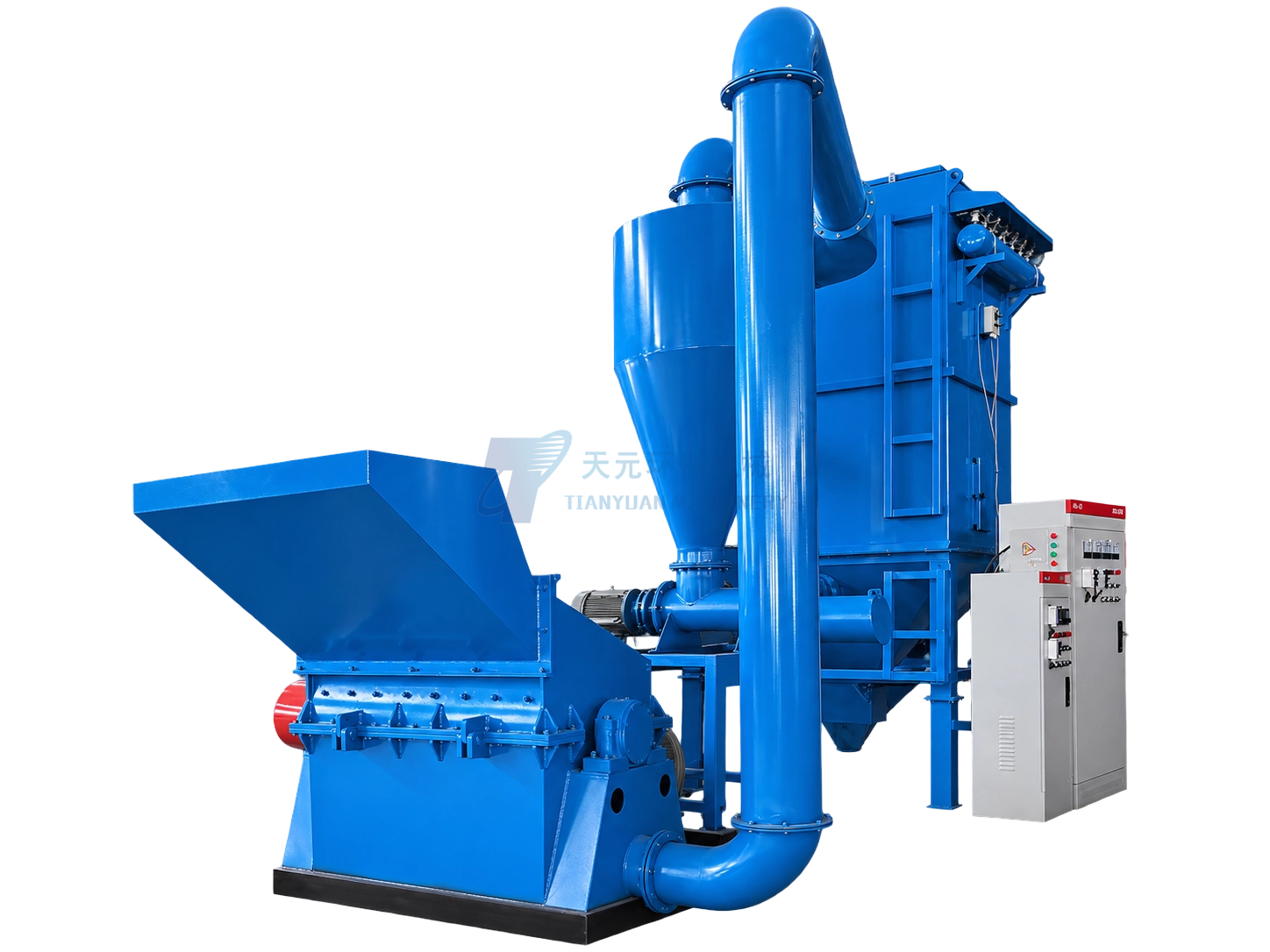
Crusher is a general designation that may refer to a coarse reduction machine using different mechanical actions. In wood flour manufacturing, an appropriate coarse machine can prepare wooden solids for handling or for evaluation by a downstream fine mill. Crushing is not necessarily fine grinding, and the output is not guaranteed to correspond to sawdust, a single chip dimension or a particular flour grade.
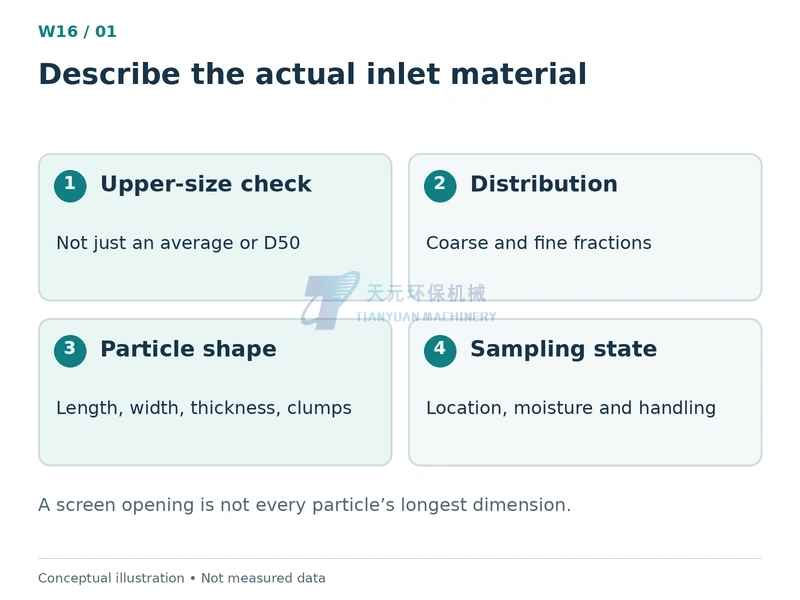
Review the actual distribution of pieces, including the large fraction and elongated fragments, as well as the nominal size. A specification describing only an opening diameter does not establish that every piece behaves acceptably at the next machine's inlet. The guide to feed size and wood grinding explains why the real inlet distribution and material condition matter.
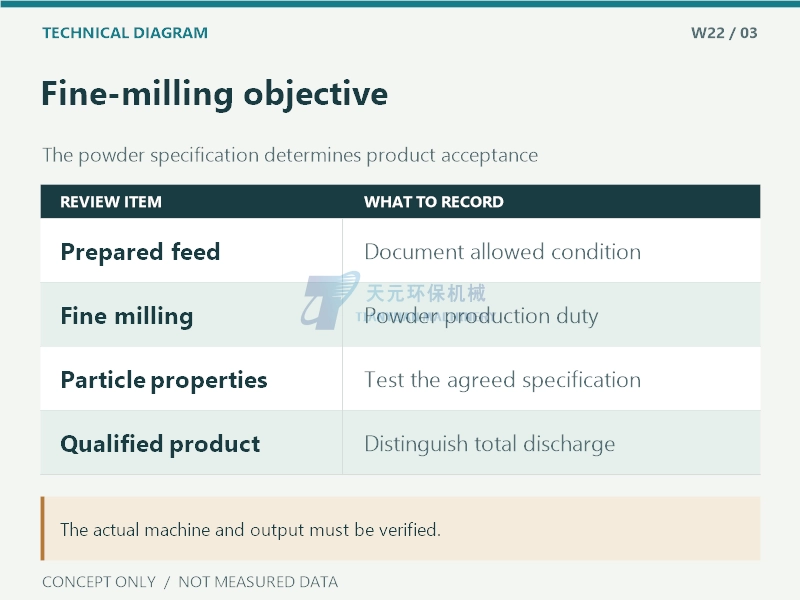
A fine wood mill has a powder specification objective
In this article, a fine grinder is a machine intended to reduce prepared wood to flour or powder. The output needs to be assessed against the product's agreed size distribution and other characteristics, rather than identified as acceptable solely by its appearance. The Forest Products Laboratory chapter on wood-polymer composite raw materials describes size reduction and size classification as general elements of wood flour production.
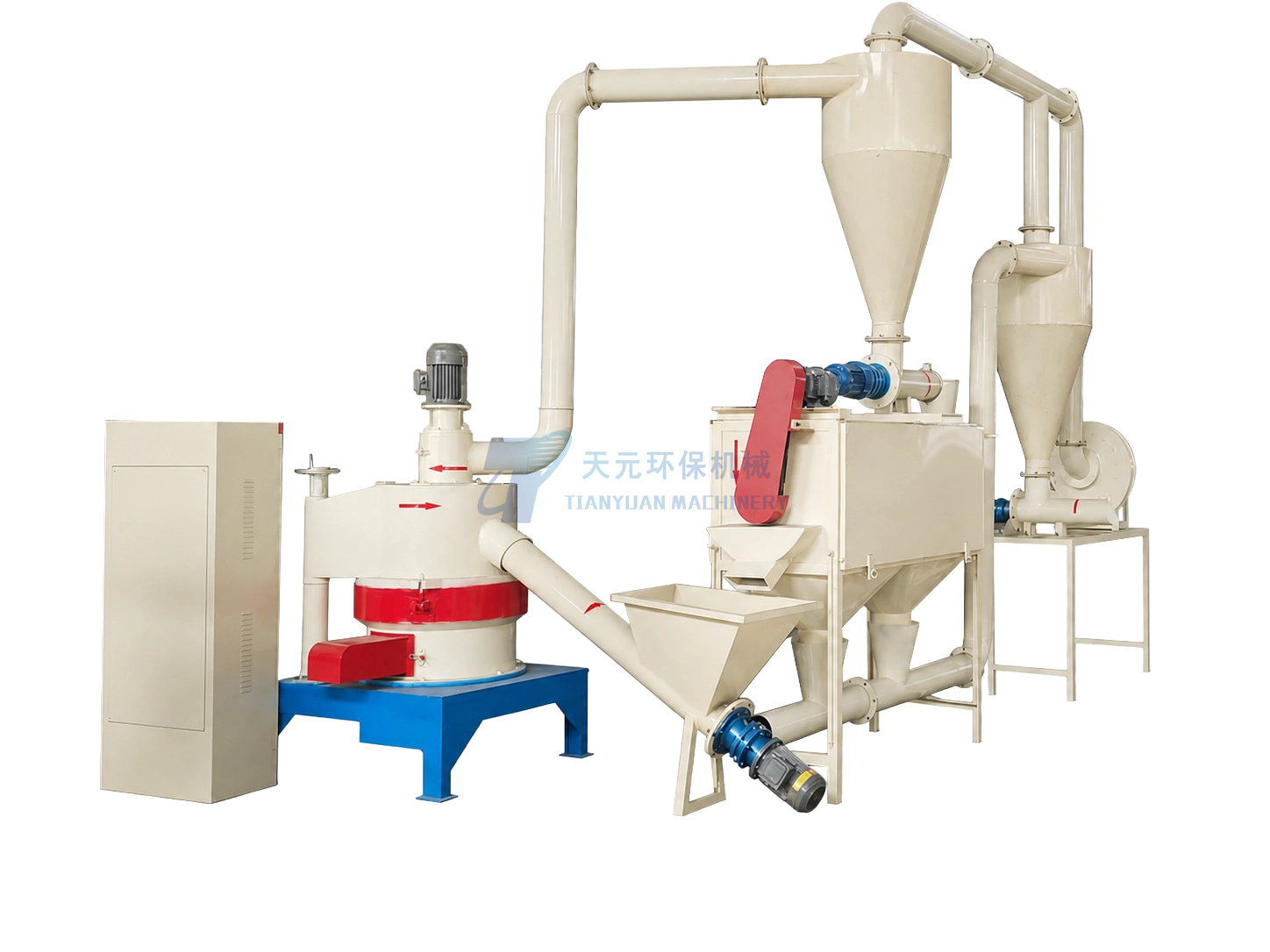
The TYMF6R-600 ultrafine wood powder mill belongs to a fine-milling product family for appropriately prepared feedstock, not a general-purpose log crusher category. For the target powder, ask which material condition is permissible and how qualifying product yield and output are determined. The name of the model or appearance of a sample is not a guarantee that a specific feed or flour grade will be achieved.
Why grinder can have different meanings
Distinguish forestry grinders from flour mills
In forestry equipment terminology, a grinder can be a coarse machine producing woody fragments for transport or utilization. That designation is not identical to a grinding mill or pulverizer intended to manufacture fine powder. Conversely, a manufacturer may describe a mill using crushing terminology. The distinction is not resolved by choosing one English dictionary definition.
When reviewing quotations, ask what the equipment is intended to produce and what evidence supports those claims for a representative feed. A company overview of wood recycling with chippers, crushers and mills illustrates the relationship between equipment duties. It does not mean all three functions must be supplied by separate machines in every project.
Translate equipment names into purchasing requirements
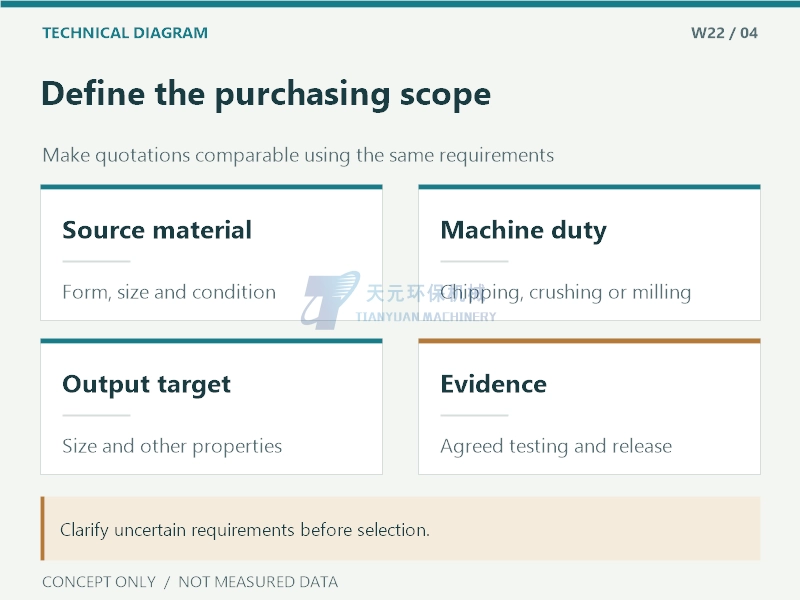
Describe the actual source and form of wood, dimensions and shape of the incoming material, moisture condition, known unwanted material, and desired product. Specify how product size and other quality attributes will be evaluated. A throughput figure should identify whether it refers to all discharge or only material meeting the agreed product criteria; compare figures on equivalent definitions.
With this information the supplier can describe each proposed machine's role before determining the wider production arrangement. Pretreatment of logs and branches covers preparation before powder production, while preparing a grinding test helps define representative samples and measurable objectives. If information is missing, record the requirement as pending rather than choose equipment from its name.
Different machines require their own safety assessment
Chipping, crushing and fine milling involve machinery hazards. Processing wood also introduces occupational dust exposure and fire-related risks. HSE wood dust guidance gives general health and prevention context. Permitted feed, equipment guards, dust controls and all safe operating requirements must be established by the manufacturer and competent personnel for the actual facility. This comparison is not an operating manual or evidence of regulatory compliance.
Frequently asked questions
Can a wood chipper make finished wood flour directly?
The characteristic output of a chipper is chips. A finished flour must meet its agreed powder specification; the need for milling and classification depends on actual feed and target requirements.
Are a wood crusher and a grinder always different types?
The terminology overlaps. Compare the machine's documented duty, permitted materials and demonstrated output, not only its name.
Why do some forestry grinders produce coarse particles?
Grinder is also used for forestry size-reduction equipment. Coarse biomass fragments and specified fine wood flour represent different product objectives.
Do I need a chipper when my feed is already sawdust?
Not necessarily. Suitable existing feed may not need a chipping operation, but its actual size, moisture and compatibility with the next machine need confirmation.
What information should be compared before selecting equipment?
Representative feed, permissible inlet condition, intended output, definition of qualifying throughput, verification method and facility-specific safety requirements.
What to prepare next
Define the machine's actual duty first: cutting chips, preparing smaller solids, or producing flour that meets an agreed specification. With representative feed and output requirements, ask the supplier to confirm which model and scope are appropriate rather than relying on the equipment label.