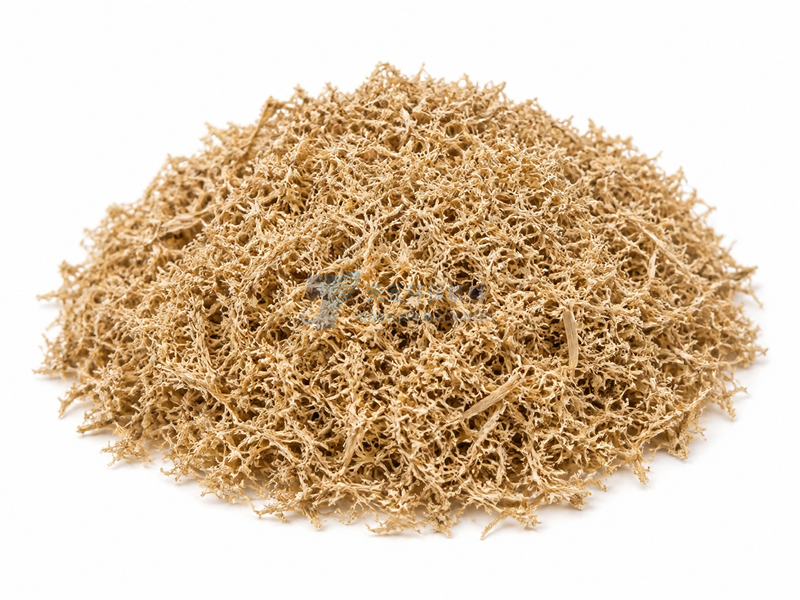
A batch of fine brown powder may contain wood, bark and material picked up during handling. Those components do not become equivalent simply because they pass the same sieve. For buyers and processors, the important question is what the powder contains and whether that composition meets the intended use.
Bark can change ash content, appearance and particle or application behaviour. It is not automatically an unwanted contaminant, but it cannot be silently substituted for an agreed wood-flour feedstock. Identify the source and bark content, measure the relevant properties, and obtain application acceptance. There is no universal bark percentage that makes every wood flour acceptable.
Contents
1. Separate bark identity from contamination
Bark is a plant tissue; dirt is a different question
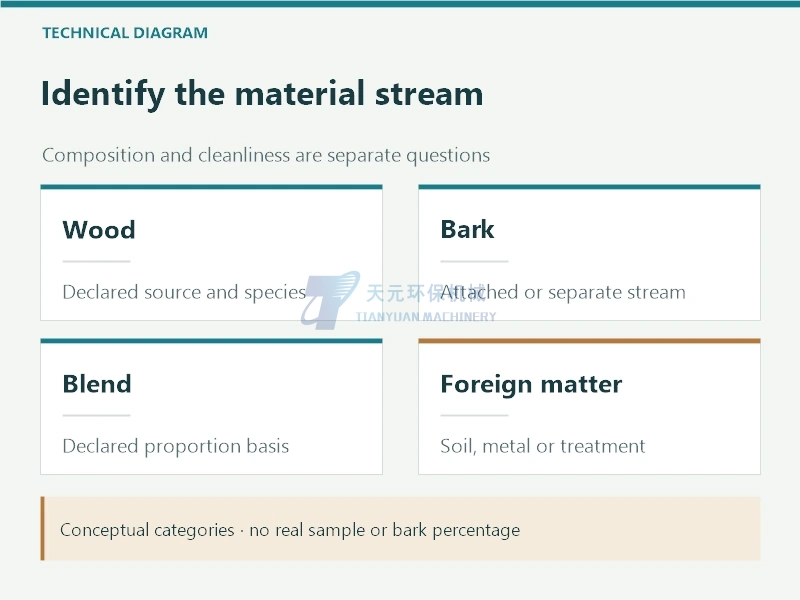
Describe whether the material is debarked wood, wood with attached bark, a controlled blend or a separate bark stream. Record the species or controlled species group, origin and changes in supply. Inner and outer bark are not necessarily interchangeable materials; an undifferentiated label can conceal meaningful variation.
Assess soil, grit, stones, metal and treated-wood residues separately. Bark can be clean, while nominally bark-free wood can still be contaminated. Do not infer cleanliness from colour or declare every dark particle to be bark. Ask the supplier how bark proportion was determined and on what basis, then retain samples that preserve the identity of each incoming lot.
2. Interpret ash as a measured property
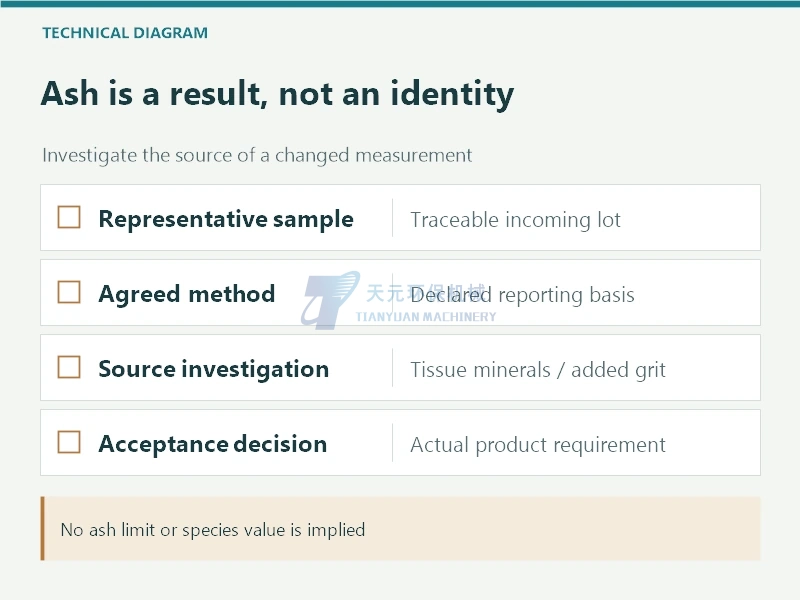
In Harper and Eberhardt’s study of loblolly-pine particles, all bark fillers had higher ash contents than the whole-wood samples. This gives a reason to measure ash when composition changes, not a fixed value for an unknown batch. Species, tissue and attached mineral contamination can all matter; one literature value cannot replace a representative test.
Specify the laboratory method and reporting basis with the buyer. Keep naturally occurring inorganic matter distinct from added soil or grit when investigating a change. High ash alone does not identify its source, and low ash alone does not exclude every unwanted treatment or organic contaminant. If origin is uncertain, investigate the source and select additional analysis for that uncertainty.
3. Evaluate colour and particle characteristics independently
A sieve result does not identify composition
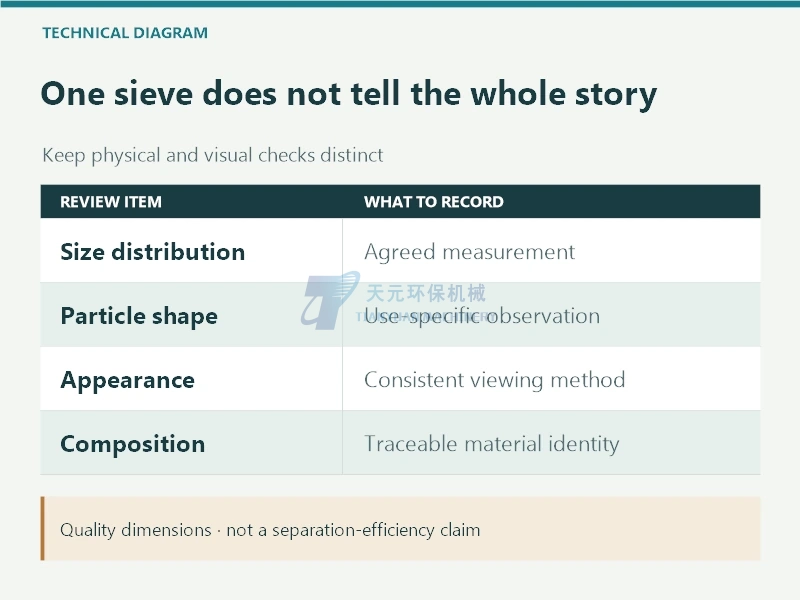
If visual appearance matters, compare retained samples under consistent lighting, preparation and viewing conditions. Describe the customer’s acceptable colour range or approved reference, rather than using “light” or “dark” as a substitute for an agreement. A colour shift can prompt investigation but cannot quantify bark content by itself.
Check particle-size distribution and, where relevant, particle shape. Bark and wood that fall into the same sieve fraction may still differ in composition and behaviour. Do not claim that fine grinding removes bark, or that a screen separates all bark from wood. Any proposed separation process needs its own feed-specific evidence, including the composition and recovery of the accepted stream.
4. Judge the intended application, not the word “bark”
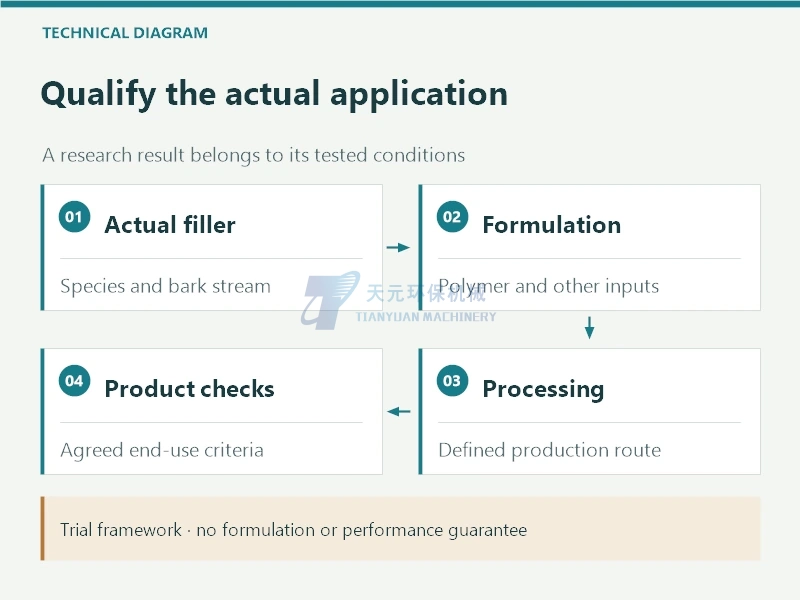
A controlled bark filler may be investigated for a particular product, while an unreported bark increase may fail an existing wood-flour specification. Harper and Eberhardt’s loblolly-pine study found differences between bark and wood fillers in polypropylene composites. The result belongs to those materials and tests; it does not rate every bark-containing powder.
Çetin and colleagues studied Turkish-pine bark in HDPE composites, again within a defined formulation and processing route. Such research supports application-specific trials, not a promise of stronger, cheaper or more durable products. If a customer changes filler composition, agree relevant processing and finished-product tests before routine substitution. A milling trial alone does not establish downstream product performance.
5. Write an acceptance plan before mixing or milling
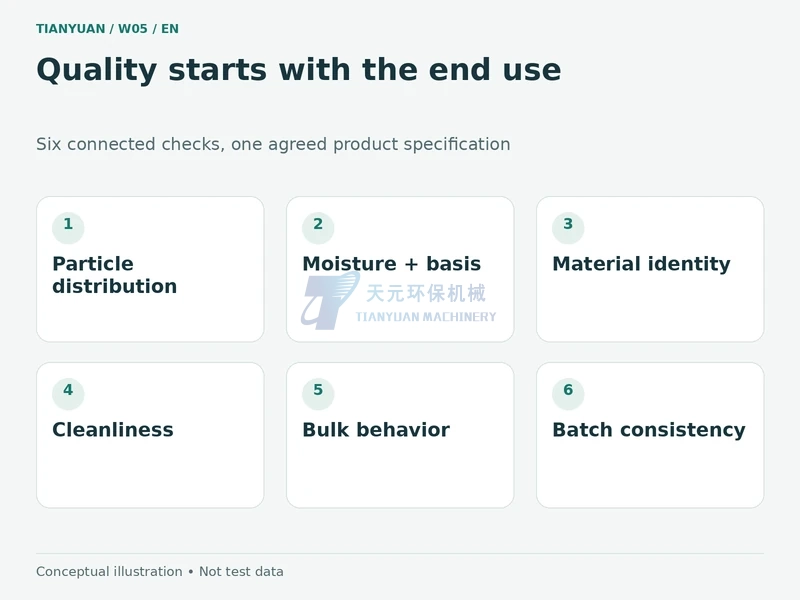
Begin with the intended use and a traceable reference material. Define which properties need a numeric criterion, which need a visual reference, and which require documentary evidence. The wood-flour quality guide provides the wider framework; bark identity is one part of that specification, not a replacement for moisture and particle-size control.
Use the following table as a planning checklist. Agree methods and acceptance with the customer and laboratory. If bark content changes, avoid blending the lot into accepted stock before deciding what evidence is needed. Record who authorized any changed specification and which batches it covers.
| Item | Evidence to request | Decision it supports |
|---|---|---|
| Material identity | Origin, species, bark description and declared proportion basis | Whether the supply matches the agreed feedstock |
| Ash and cleanliness | Representative laboratory result plus contamination investigation | Whether the measured property and source are acceptable |
| Appearance | Retained sample and agreed viewing or colour method | Whether the powder matches the approved appearance |
| Size and shape | Agreed distribution test and relevant shape observation | Whether milling and separation meet the physical specification |
| Application | Trials using the actual formulation and processing route | Whether the changed filler is suitable for its intended use |
6. Choose preparation from the actual deficiency
If the customer requires a defined low-bark wood stream, discuss source selection or suitable upstream debarking and sorting before fine grinding. Their effectiveness must be checked on the accepted output; do not promise complete removal or a fixed recovery. Once bark and wood have become similar fine particles, a simple downstream screen should not be assumed to identify and separate them.
Keep cleaning, size reduction, moisture conditioning and composition control as distinct tasks. None substitutes for all the others. Use a representative grinding-test preparation plan that includes the actual bark-containing range, agreed powder checks and traceable samples. Record rejected material and accepted powder separately; the quantity entering the mill is not the yield of accepted wood flour.
7. Keep equipment selection inside the confirmed boundary
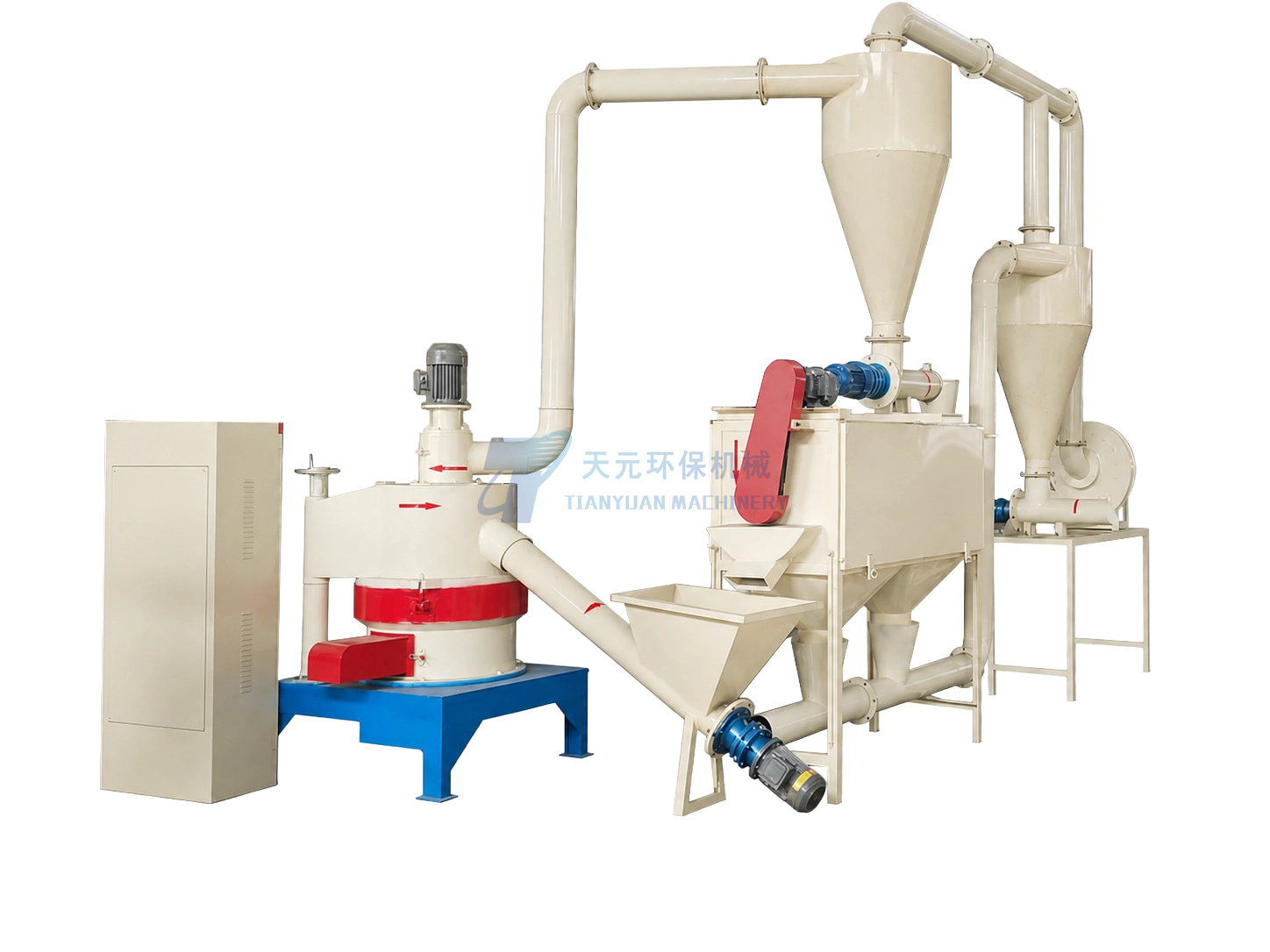
The TYMF6R-600 wood powder mill is used for fine grinding after necessary preparation. Its public page lists 30–325 mesh, 100–500 kg/h and maximum feed diameter 5 mm. These are model ranges, not bark-specific trial results, and do not promise maximum fineness together with maximum output. Confirm complete dimensions, form, moisture and the actual feed composition.
The name “bark” does not itself approve a feedstock for this model. Ask the technical team to assess the representative material and required product before committing to a route. Fine particles also require suitable handling and wood-dust capture at source. A favourable application paper or a fine-looking sample is neither a machine qualification nor a safety assessment.
Frequently asked questions
Is bark always a contaminant in wood flour?
No. It may be a declared component or a separately qualified filler. It becomes a specification problem when its identity or proportion conflicts with the agreed material.
Can ash content tell me exactly how much bark is present?
Not by itself. Species, tissue and mineral contamination affect the result. Establish the material history and use a suitable, validated assessment method.
Will finer grinding remove the bark?
No. Size reduction changes particle size; it does not by itself remove a component or demonstrate cleaner material.
Can bark-containing powder be used in WPC?
Possibly, for a qualified formulation and process. Research on a specific bark and polymer is not approval for another feedstock, formulation or finished product.
What should I send for a technical evaluation?
Provide origin, species, bark description and proportion basis, contamination history, complete dimensions, moisture method, target powder specification and intended application, with representative samples.
What to prepare next
Treat bark as a composition question that must connect to a measurable product requirement. Identify the supply, separate ash and contamination investigations, check appearance and particle properties, and validate any changed filler in its actual use. Confirm the feedstock with the equipment technical team before selecting preparation or promising an acceptable wood-flour output.