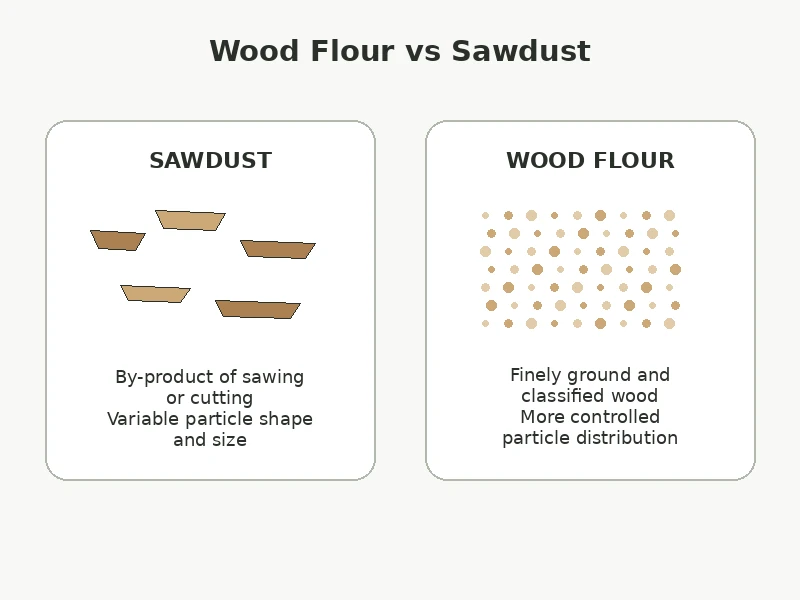
Wood flour and sawdust both come from wood, but they should not be treated as interchangeable materials. Sawdust is generally a by-product created during sawing, cutting, machining, or other woodworking operations, so its particle size, shape, moisture content, and cleanliness may vary considerably. Wood flour is a more deliberately processed material: wood is reduced to a fine particle size and normally screened or classified so that its properties are more consistent for downstream use.
Key Conclusion
The main difference between wood flour and sawdust is not simply that one is “smaller.” Sawdust is primarily defined by how it is generated, while wood flour is usually defined by deliberate fine grinding, screening, and a more controlled particle-size distribution. Sawdust can often be used as a feedstock for wood flour, but it may first need cleaning, drying, pre-screening, fine grinding, and classification. For industrial applications, particle-size distribution, moisture, species, bark content, foreign material, and consistency are usually more important than the name of the material alone.
Contents
What Is Sawdust?
Sawdust is produced when wood is cut, sawn, drilled, sanded, shaped, or machined. In industrial woodworking, it is often collected from sawmills, furniture plants, panel-processing operations, and other wood-processing facilities. Because it originates as a by-product rather than as a tightly specified powder product, its properties can vary significantly.
A sawmill handling fresh softwood logs may produce sawdust with relatively high moisture content. A furniture factory machining kiln-dried boards may generate much drier material. Particle geometry can also vary with the cutting tool and operation. Circular sawing, band sawing, sanding, planing, and routing do not necessarily produce the same particle shape or size distribution.
Sawdust can also contain bark, small wood chips, splinters, sanding dust, metal fragments, sand, glue residue, coatings, or other foreign material depending on its source. Clean sawdust from controlled raw material may be a useful industrial feedstock, but mixed woodworking waste requires much more careful evaluation.
What Is Wood Flour?
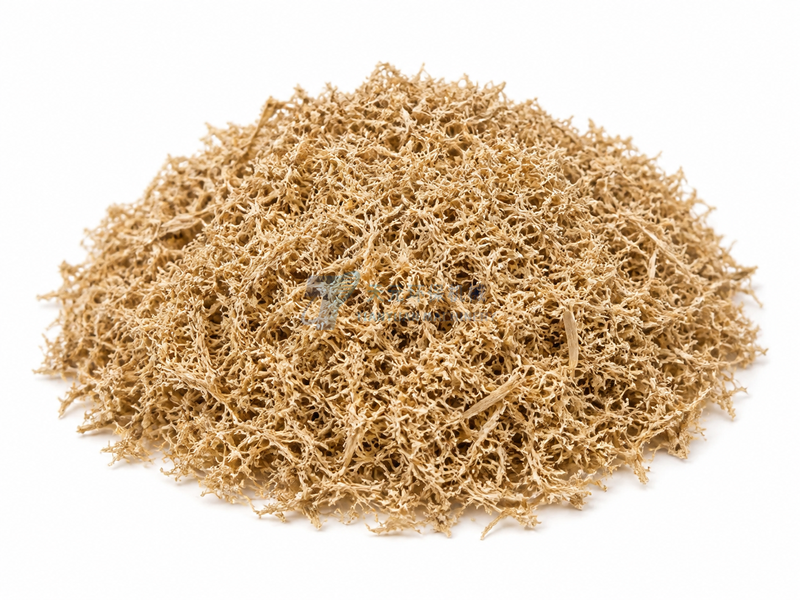
Wood flour is finely divided wood produced so that the resulting material has a relatively controlled fine particle distribution. The term is not governed by one universal particle-size boundary in every industry or country, but it normally describes wood particles much finer and more uniform than ordinary sawmill residues.
In practical production, wood flour may be made directly from selected wood material or from suitable sawdust and other prepared wood residues. The feedstock is normally cleaned and screened, dried when required, reduced to a suitable feed size, finely ground, and then classified or sieved. Oversized particles may be returned for further grinding while the required fraction is collected as finished wood flour.
This additional processing is important because many downstream applications depend on predictable particle behavior. If one batch contains mainly fine particles while another contains fibers, chips, bark, and coarse fragments, feeding, mixing, dosing, surface finish, dispersion, and storage behavior may change.
Main Differences Between Wood Flour and Sawdust
Sawdust
Sawdust is normally a woodworking by-product. Its particle size and shape depend on the cutting or machining operation. Moisture and cleanliness depend heavily on the source. It may contain coarse pieces or unwanted foreign material and may require preparation before further processing.
Wood Flour
Wood flour is a deliberately refined fine wood material. Grinding and screening or classification are used to achieve a more controlled particle-size distribution. Moisture, species, purity, and fineness are normally specified according to the intended application.
The important distinction is therefore process control. Very fine sawdust can visually resemble wood flour, and coarse wood flour can overlap with the finer fraction of some sawdust streams. The names alone cannot guarantee performance. For an industrial project, actual particle-size analysis and raw-material inspection are more useful than judging the material only by appearance.
Particle Size and Distribution
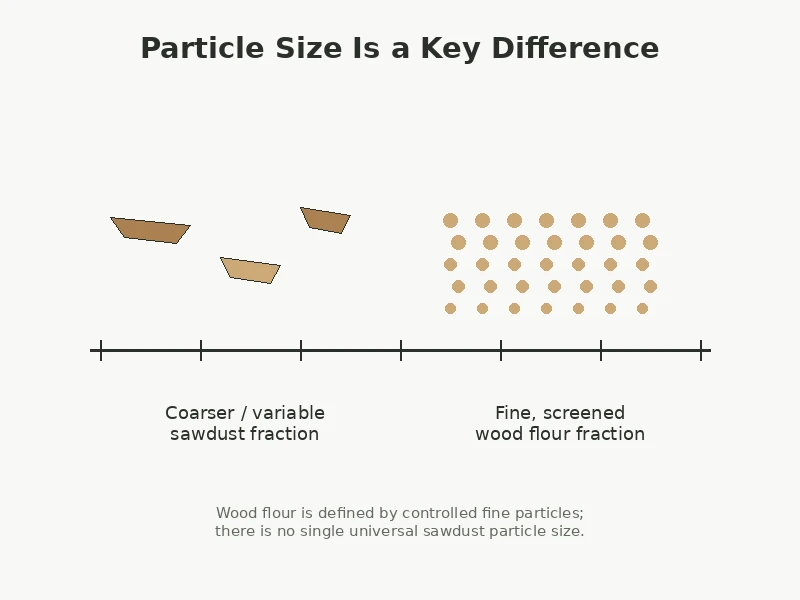
Particle size is one of the clearest practical differences. Wood flour is generally associated with fine screened material. Published technical literature often describes commercial wood flour in terms of mesh size or microns, but the exact grade depends on the application. There is no single particle size that makes every material above it sawdust and every material below it wood flour.
What matters more is the distribution. A nominally “fine” material may still contain a significant coarse tail. Another batch may contain excessive ultrafines. Both can behave differently even when their average particle size is similar. Industrial buyers should therefore look at screen analysis or particle-size distribution rather than relying only on a single mesh number.
Particle morphology also matters. Wood is fibrous, so grinding does not produce perfect spheres. Depending on wood species, moisture, grinding mechanism, and fineness, particles may remain elongated, fibrous, irregular, or fragmented. As grinding becomes finer, the original wood-fiber structure is progressively reduced and the specific surface area increases.
How Sawdust Can Be Processed into Wood Flour
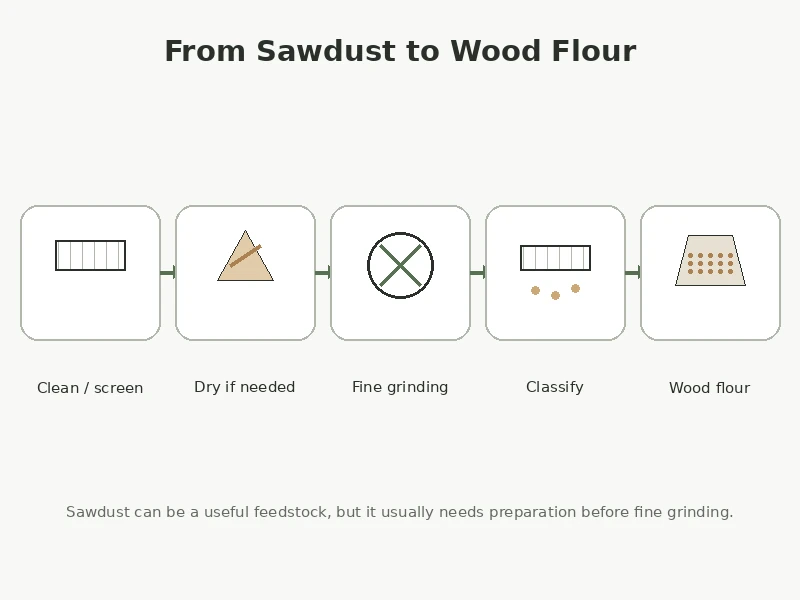
Clean sawdust is often a practical raw material for wood flour, but the process is usually more than simply placing sawdust into a fine grinder. First, the feedstock should be evaluated for wood species, moisture, contamination, bark content, particle size, and consistency.
1. Cleaning and Pre-Screening
Large chips, stones, metal pieces, bark fragments, and foreign material should be removed where required. This helps protect downstream equipment and improves final product consistency.
2. Moisture Adjustment
Moisture strongly affects grinding behavior. Wet or fresh sawdust can become difficult to grind finely, may block screens, may form agglomerates, and can reduce classification efficiency. The required moisture level depends on the material and process, so it should be established through actual production requirements rather than a universal number.
3. Fine Grinding
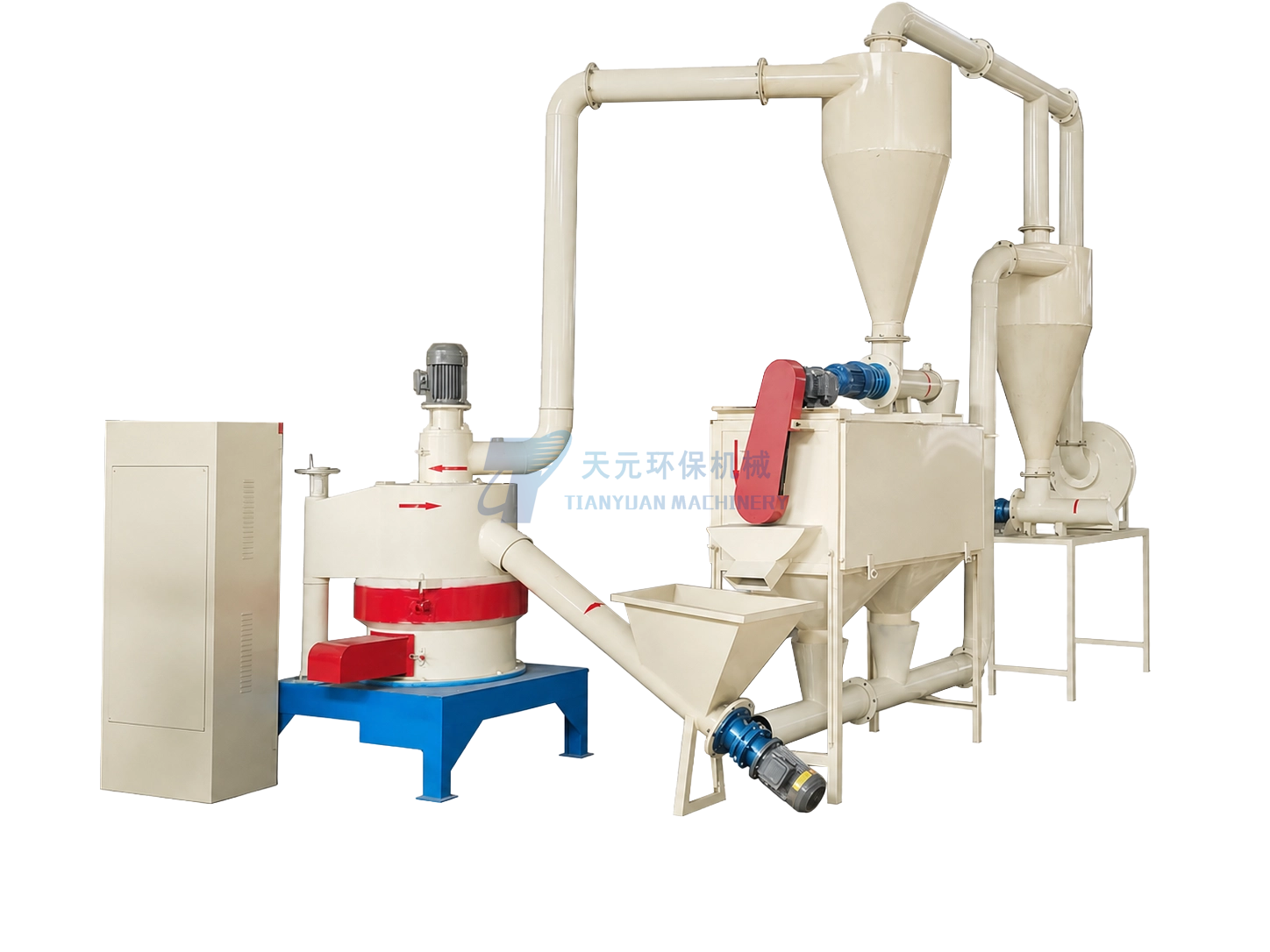
Once the material is suitably prepared, a wood powder mill or wood flour mill can reduce the particles further. This stage is different from primary wood crushing. A chipper or crusher prepares logs, branches, offcuts, or large pieces for further processing; a fine wood-powder mill is used later in the process when the objective is controlled fine powder.
4. Screening or Classification
After fine grinding, the required fraction needs to be separated from oversized material. Depending on the process and fineness, this may be achieved by screening, air classification, or another separation method. Classification is what turns “ground wood” into a more controlled industrial powder grade.
Moisture, Bark, and Contaminants Matter
Two materials that look like sawdust can have very different value as wood-flour feedstock. Clean dry sawdust made from known wood species is fundamentally different from mixed demolition wood residue containing paint, glue, metal, plastic, soil, and treated timber.
Bark is another consideration. In some applications a limited amount may be acceptable; in others it can change color, ash content, chemical composition, and consistency. The acceptable level depends on the final product. This is why industrial wood flour should be specified by measurable requirements instead of simply being called “fine sawdust.”
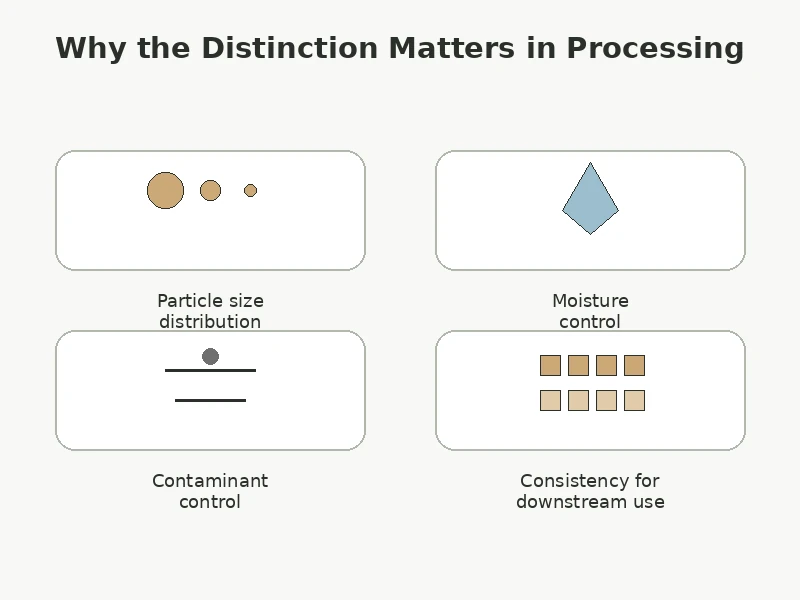
Why the Difference Matters in Industrial Applications
In many low-specification uses, ordinary sawdust can be suitable without additional fine grinding. Examples may include some bedding, fuel, composting, absorbent, or board-related applications, depending on the material quality and process. These uses do not necessarily require a tightly controlled fine powder.
Wood flour is used when finer and more consistent particles are important. Applications can include wood-plastic composites, industrial fillers, molding compounds, selected adhesive or resin systems, incense-related products, and other formulations. Each application has its own requirements, so one wood-flour grade should not automatically be assumed suitable for every use.
For wood-plastic composites, for example, particle size and aspect ratio can influence processing and mechanical behavior. In products where surface appearance matters, a finer and more uniform wood fraction may help produce a more consistent finish. In dosing and blending systems, consistency can also make feeding behavior easier to control.
What the Difference Means for Equipment Selection
The distinction between sawdust and wood flour is especially important when selecting equipment. If the raw material is logs, branches, slabs, or large offcuts, the first requirement is normally cutting, chipping, or crushing. These are pretreatment operations. They should not be confused with fine wood-powder grinding.
If the raw material is already sawdust or suitably reduced wood particles and the objective is a finer controlled powder, the project enters the wood-flour grinding stage. At this point, feed moisture, feed size, fiber characteristics, target particle distribution, capacity, dust collection, and classification become important design inputs.
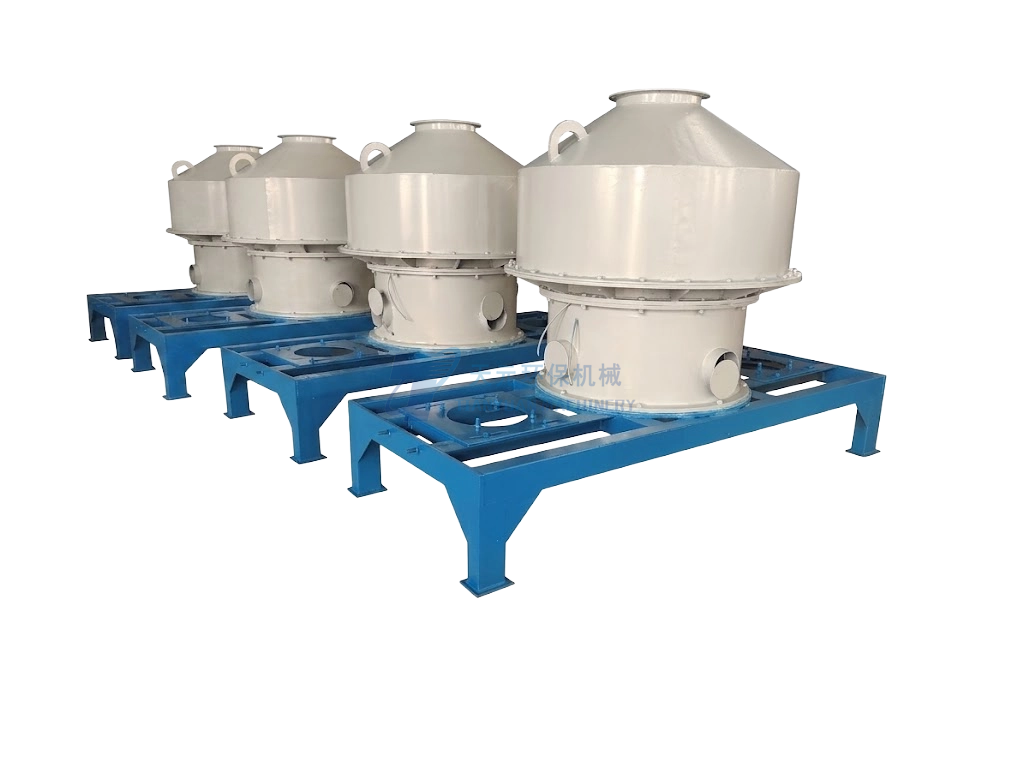
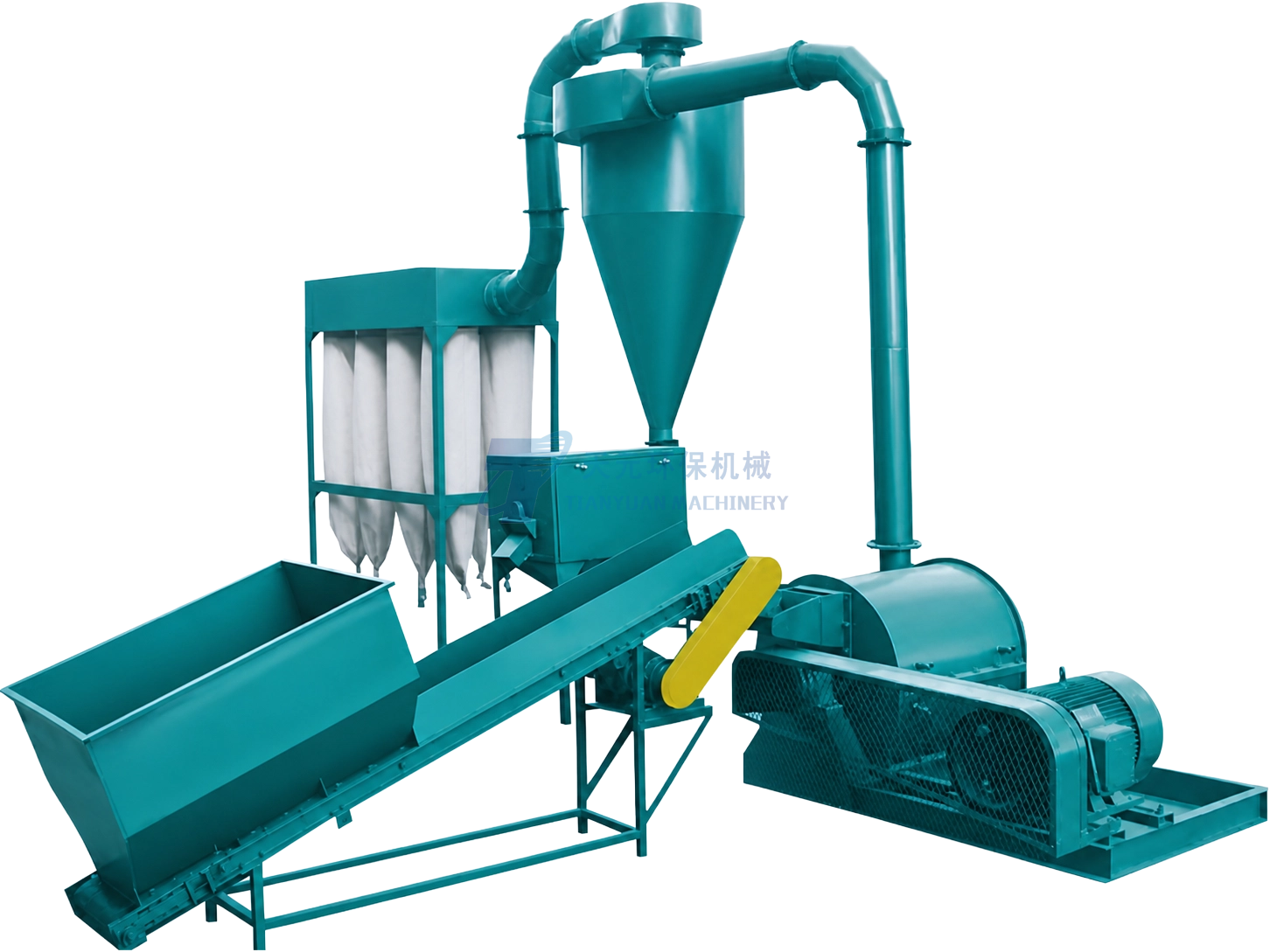
Tianyuan’s wood powder equipment is positioned for the fine grinding stage of suitable woody and plant-fiber materials rather than as a substitute for primary wood crushers. A complete production line may therefore include cutting, crushing, drying, fine grinding, dust collection, classification, conveying, and packaging, depending on the real raw material and finished-product requirement.
Fine wood dust is combustible. As particle size decreases, dust handling and collection require appropriate engineering controls. Fire and explosion risk depends on material properties, dust concentration, ignition sources, equipment configuration, ventilation, and operating conditions. A professional dust-hazard assessment should be part of projects involving large quantities of fine combustible wood powder.
Frequently Asked Questions
Is wood flour the same as sawdust?
No. The terms can overlap visually, but sawdust is generally a by-product of cutting or machining wood, while wood flour is usually a finer, intentionally ground and classified material with more controlled particle characteristics.
Can sawdust be used to make wood flour?
Yes. Clean and suitable sawdust is commonly used as a feedstock, but it may need cleaning, drying, screening, fine grinding, and classification before it becomes a controlled wood-flour product.
Is there a universal particle-size limit between sawdust and wood flour?
No. Technical references and commercial grades use different ranges. Wood flour is generally finer and more controlled, but the final specification should be based on particle-size distribution and application requirements rather than a universal boundary.
Does all sawdust need drying before fine grinding?
No single rule applies to every material, but excessive moisture can make fine grinding and classification difficult. The moisture requirement should be determined from the specific wood, equipment, target fineness, and process.
Is a wood crusher the same as a wood flour mill?
No. A wood crusher normally performs primary or intermediate size reduction of larger wood material. A wood flour mill is used later to produce a finer wood powder from already prepared feedstock.
Conclusion
Wood flour and sawdust are related materials, but the difference is important in industrial processing. Sawdust describes a variable by-product generated during woodworking. Wood flour describes a more deliberately processed fine wood material whose particle size and consistency are controlled for downstream use.
When evaluating a wood-powder project, do not rely on the material name alone. Identify the actual raw material, moisture, species, contamination level, feed size, target particle distribution, capacity, and final application. These factors determine whether simple screening is sufficient, whether drying is needed, and whether a dedicated fine wood-powder grinding stage is appropriate.