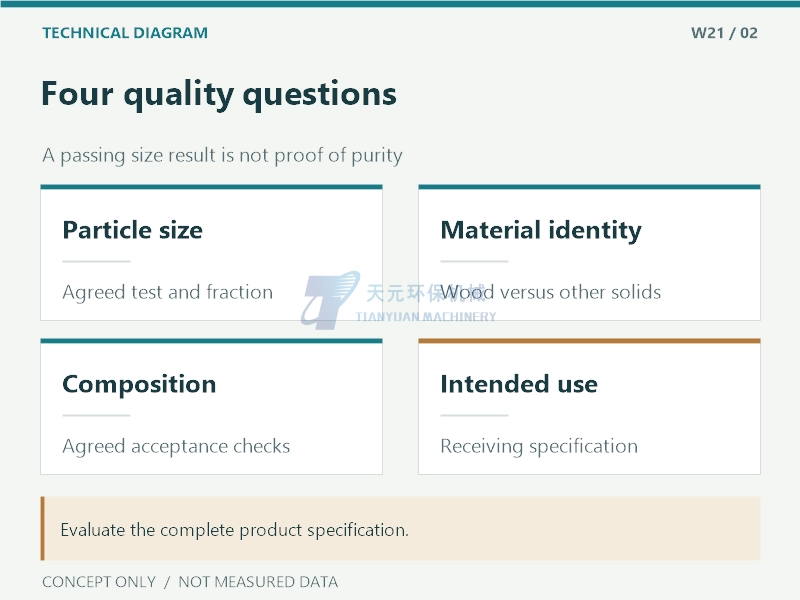
Logs, chips, sawdust and shavings may look suitable for size reduction while still containing material that does not belong in a particular wood flour process. Feed acceptance has to consider origin, physical contamination, material composition and the intended product, not simply the size of the pieces.
Metal fragments, stones and other foreign material can damage processing equipment, introduce impurities into wood flour and create occupational safety concerns. Identify the contamination classes, agree appropriate verification and release requirements, and assess representative feed against the confirmed machine and product specifications.
Contents
Distinguish foreign objects from material contamination
A wooden appearance is not a cleanliness certificate
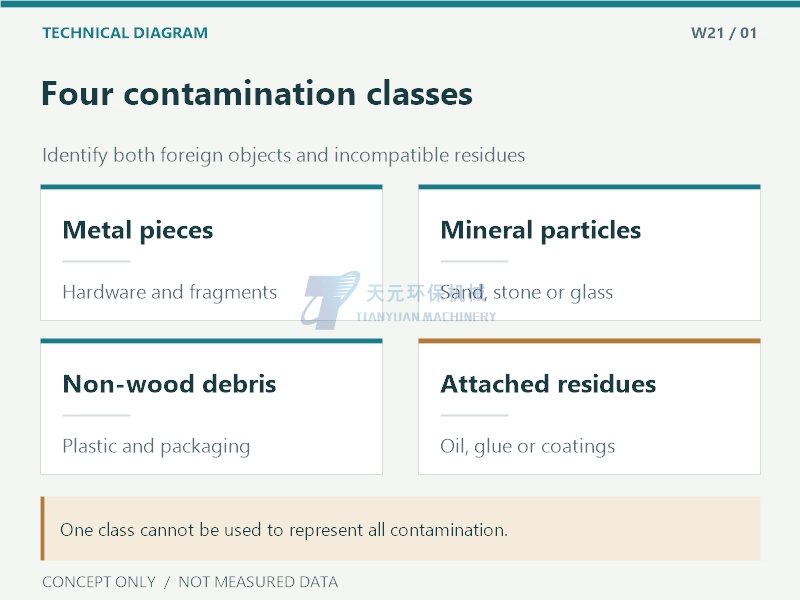
A foreign object is material that does not belong in the specified wood feed: a nail, a screw, a fragment of wire, a stone or glass, for example. Plastic particles and packaging remnants may also be present. Paint, oil, glue and certain surface treatments pose a different question, because the incompatible constituent may adhere to the wood rather than remain a separable object.
The acceptance decision therefore depends on both the intended wood material and its history. Material collected during production is not necessarily the same as refuse collected from the ground. A feed source suitable for one industrial product may be unsuitable for another. The subject of recovered wood for flour production is source eligibility; here the question is how to recognize and evaluate specific unwanted constituents.
Effects of contaminants on size-reduction equipment
Cutting and milling machines are designed for specified feeds and operating conditions. Hard objects outside those requirements can cause unexpected wear or damage to working surfaces and screen components. Flexible or irregular unwanted material can also interfere with material handling. Neither an apparently large feed opening nor a powerful drive establishes that contaminants are acceptable.
The USDA Forest Service report on woody biomass preprocessing describes additional tool wear associated with soil, metal and stone in chipping. This is evidence of a problem class, not a numerical tolerance for a specific wood flour mill. Unexpected foreign material or abnormal equipment behavior must be addressed according to the manufacturer's instructions and the facility's professional safety procedures; a suspect lot is not a basis for an unrestricted milling trial.
| Contaminant class | Possible consequence | Evidence to clarify |
|---|---|---|
| Ferromagnetic items | Damage and product inclusion | Material identity and verified detection coverage |
| Non-ferromagnetic metals | May not be covered by magnetic separation | Material-specific verification |
| Sand, stone or glass | Abrasive or hard contamination | Source records and lot specification |
| Coatings, oil or adhesive | Altered composition and usability | Material history and end-user requirements |
What foreign material means for wood flour quality
A particle that passes a screen is not automatically a particle of wood. Size reduction may leave unwanted constituents in the accepted size fraction. The flour may then fail agreed visual, compositional or application-specific requirements even though its nominal fineness is suitable. Extra processing does not establish improved purity.
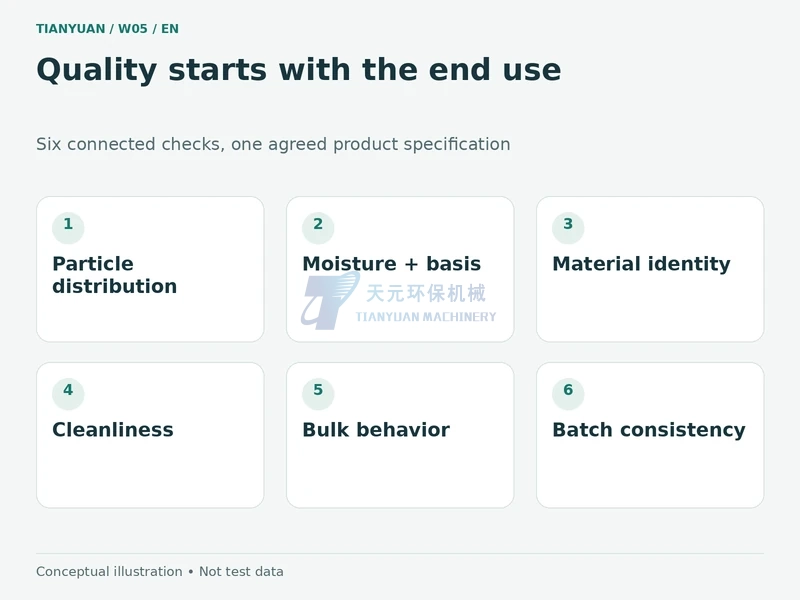
For meaningful acceptance, specify which product attributes are measured, what constitutes an objectionable contaminant, what sampling and test methods apply and who is responsible for release. The wood flour quality factors guide distinguishes fineness from other quality dimensions. The Forest Products Laboratory chapter on raw materials for wood-polymer composites likewise places wood flour manufacture in a material- and application-specific context.
Recognize the limits of each inspection method
Visual checks and material-specific detection serve different purposes
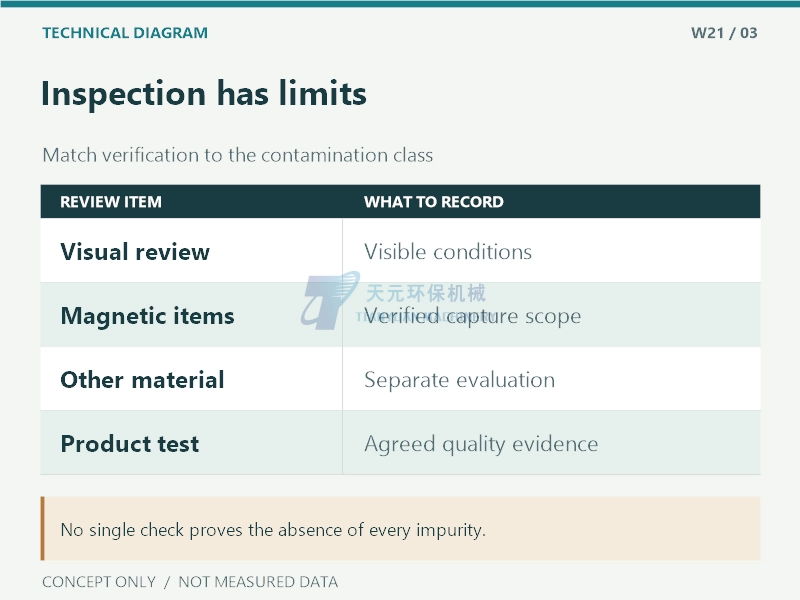
Visual examination can reveal conspicuous items or evidence of unsuitable handling, but it cannot establish the absence of embedded, very small or chemically bound constituents. A magnetic separation system addresses material it is actually able to capture; installing one does not establish that all metals or non-metallic contaminants have been removed.
Selection, validation and maintenance of industrial inspection or separation equipment require competent engineering judgment for the real feed characteristics and risk assessment. Where the intended product has a composition requirement, the relevant product test remains a separate verification. Do not use the presence of an inspection device as a guarantee of uncontaminated flour.
A lot-level release decision needs traceable evidence
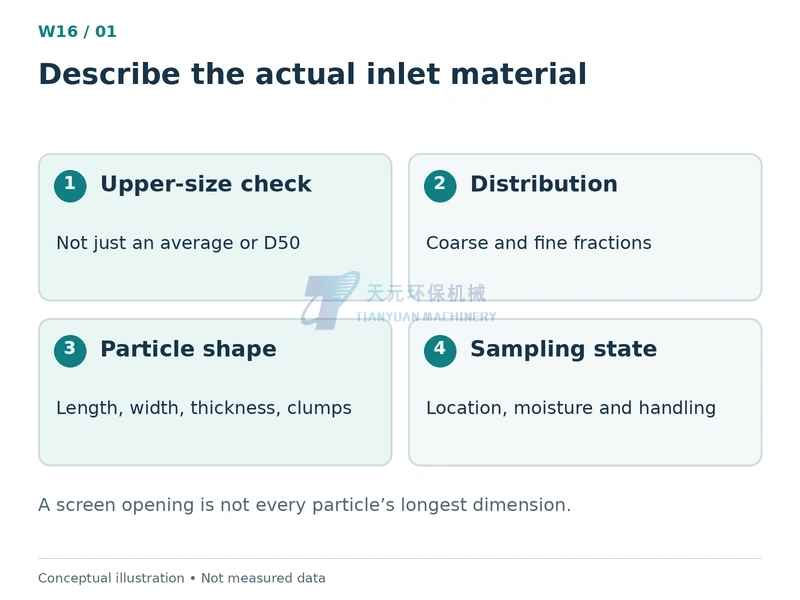
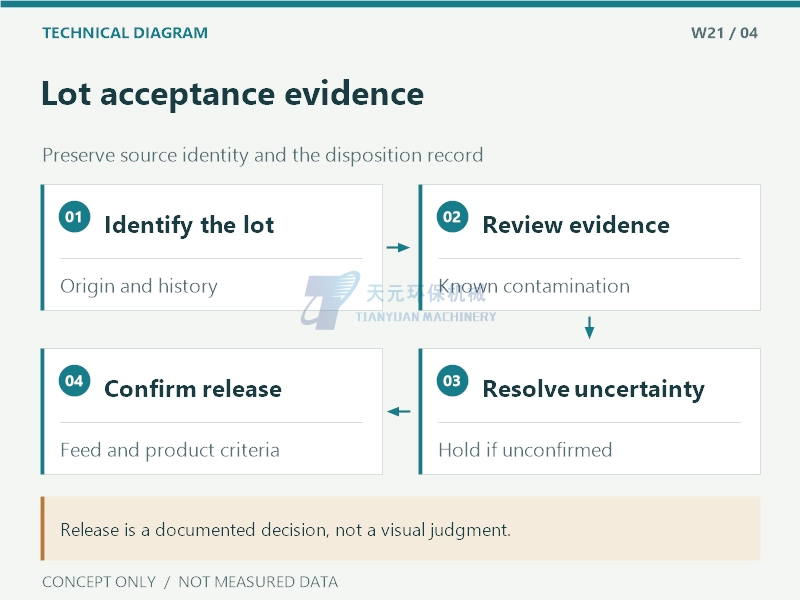
Record the wood species or material description where known, the source and previous treatment, lot identity, apparent contamination, size distribution, moisture condition and intended product. A clean-looking sample chosen from the top of a container may not represent the rest of the lot. Document deviations and the evidence used to resolve them.
Material with unresolved contamination or unknown machine compatibility should remain on hold rather than be treated as confirmed milling feed. If an agreed disposition permits prepared material, retain records of the subsequent checks. The feed-size article covers a separate machine-entry requirement, and grinding test preparation explains the importance of representative, accurately described samples. Report abnormal material instead of presenting a hand-selected clean substitute.
Safety responsibilities and equipment applicability
Wood processing involves machinery hazards and occupational dust exposure, including fire-related risks. The OSHA chipper hazard bulletin and HSE wood dust guidance provide general recognition and prevention context. Site-specific safeguards, permitted feed, emergency procedures and regulatory compliance must be assessed by qualified people for the actual installation; neither reference is a certification of any mill or process line.
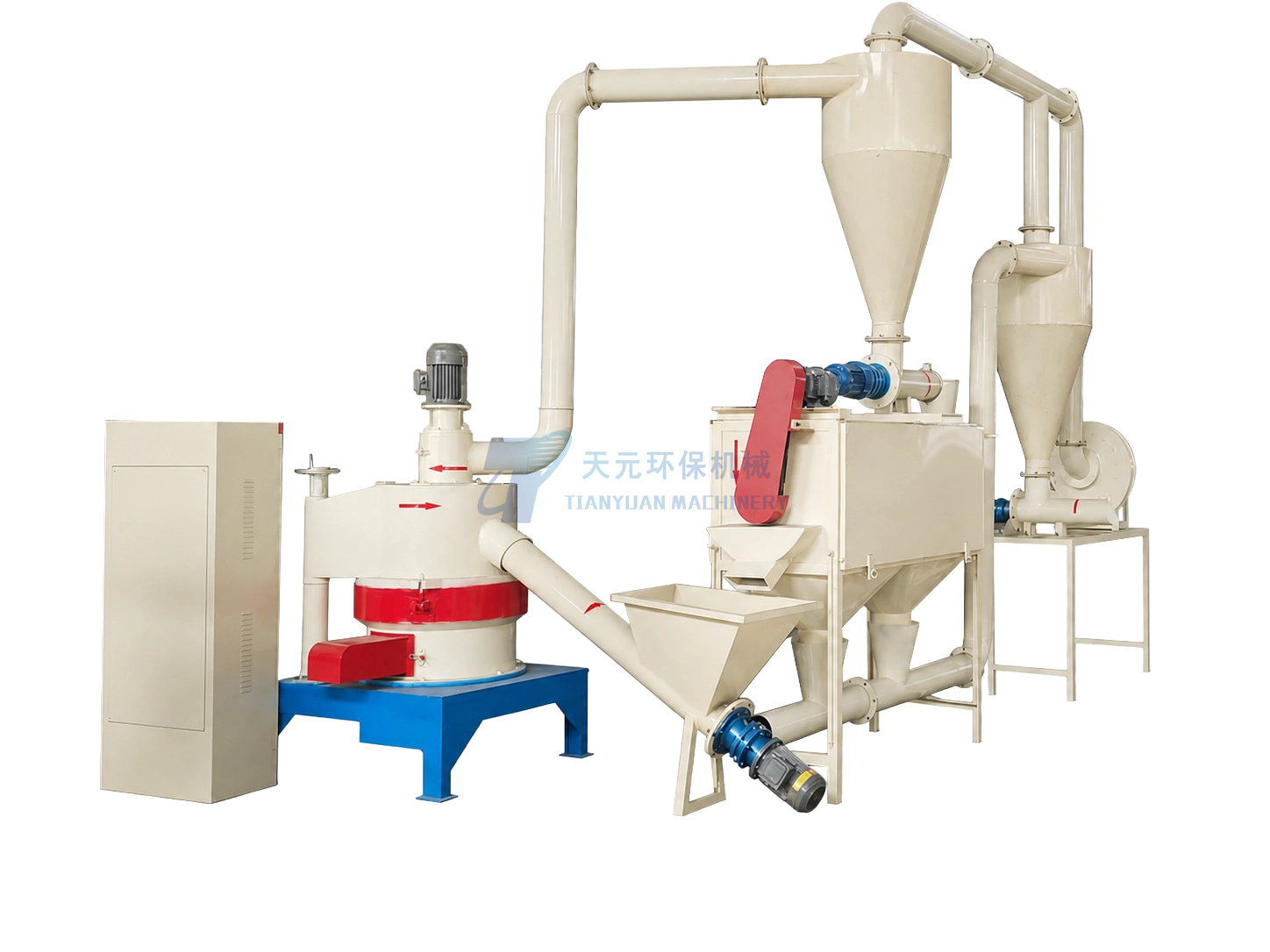
The TYMF6R-600 ultrafine wood powder mill product page provides a starting point for discussing equipment intended for appropriately prepared wood feed. Confirmation of the feed material, permitted condition, impurities and target flour properties remains necessary. Do not interpret a product category or a size range as permission to introduce foreign material.
Frequently asked questions
Does magnetic separation make any wood feed suitable for milling?
No. It addresses only the material and conditions for which capture has been verified. Other contaminants, machine requirements and the intended flour specification still need confirmation.
Can stones or other foreign objects simply be milled finer?
No. Reducing the dimensions of unwanted material does not remove it or make it wood. It may damage equipment or remain as product contamination.
Does apparently clean sawdust require acceptance checks?
Yes, according to its source, handling history and specification. Transfer, storage and mixing of otherwise clean material can introduce contamination.
Why isn't a passed sieve test proof of flour purity?
Sieving assesses whether particles pass a specified opening under the chosen test conditions. It does not generally establish their identity or chemical composition.
What should a buyer disclose to the equipment supplier?
The actual feed origin and dimensions, moisture condition, known or suspected unwanted constituents, preparation records and agreed finished-product requirements.
What to prepare next
Define acceptable feed first and evaluate equipment and inspection against that definition. For a machine or production inquiry, share representative material information and the required flour specification with the supplier so that qualified personnel can evaluate suitability without assuming contaminant tolerance.