
TYPC Metal Crusher
The TYPC series of Metal Crushers is specifically designed for the rapid volume reduction and precise tearing and shearing of high-toughness, tangle-prone scrap metal. The equipment utilizes low-speed, high-torque moving-and-fixed-blade interlocking shear technology, combined with heavy-duty alloy blades, a replaceable screen-based material control structure, and a reinforced protective housing, enabling efficient processing of long metal shavings from lathes, scrap aluminum cans, and various types of lightweight scrap metal. Continuous high-frequency shearing and precise screening allow output size to be controlled as required. The shredded material features uniform size and high bulk density, reducing transportation costs and minimizing resistance in subsequent baling and smelting.
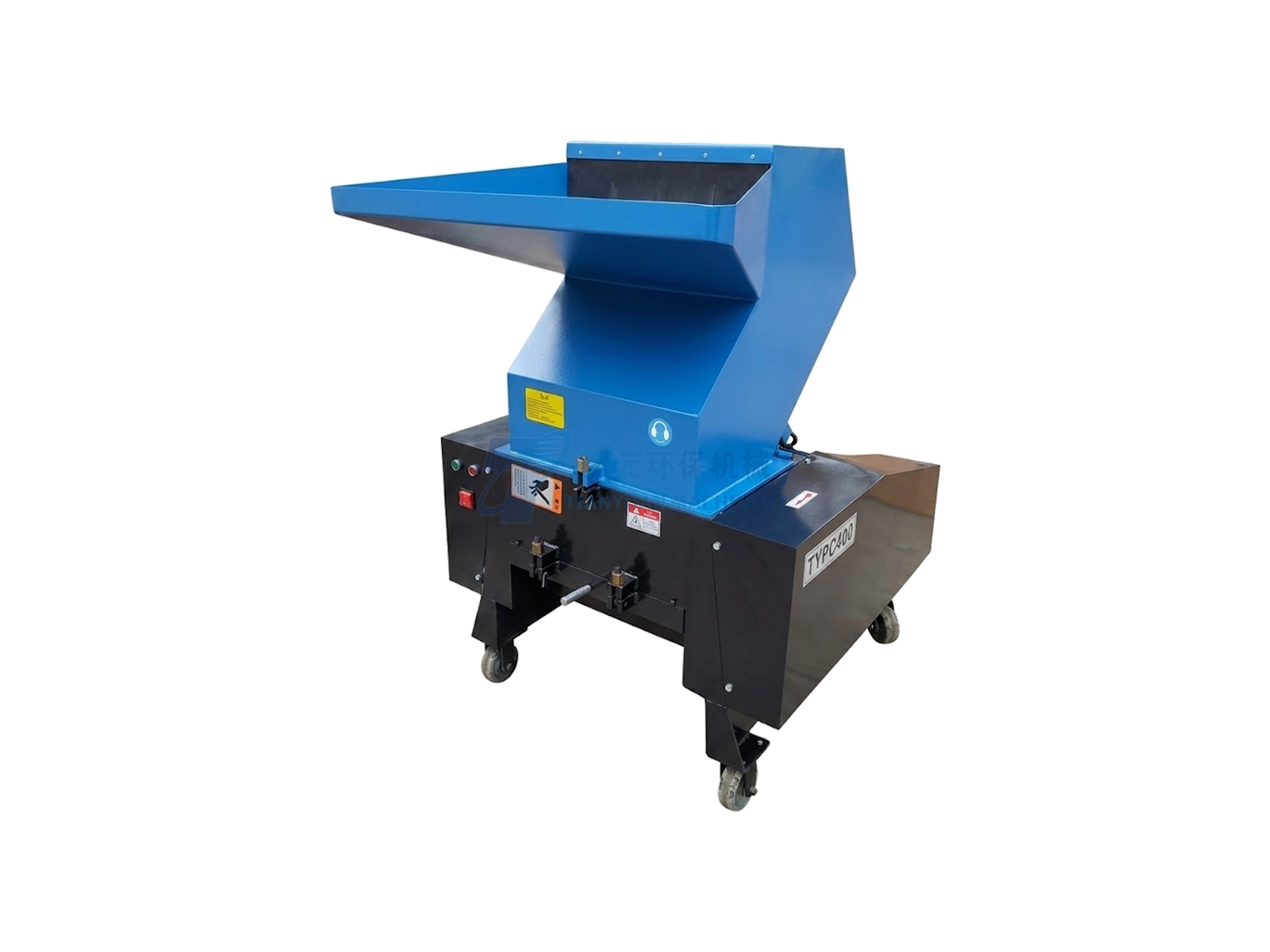
Product OverviewEquipment application and scope
The TYPC Metal Crusher is primarily used for the pre-processing of raw materials prior to metal powder processing. It crushes and reduces the size of metal raw materials that are large, irregularly shaped, or difficult to feed directly into subsequent grinding equipment, thereby creating more stable feeding conditions for subsequent metal grinding, screening, and powder processing. The equipment is suitable for metal scrap, thin sheets, lumpy materials, and certain recycled metal materials that meet the requirements for mechanical crushing. It can be specifically configured based on the raw material’s composition, shape, initial size, and subsequent processing requirements.
In the actual production of metal powders, the size and form of the raw materials directly affect the feed stability, processing efficiency, and continuous operation performance of downstream grinding equipment. The TYPC Metal Crusher uses mechanical shearing, compression, and crushing to process larger metal raw materials into relatively uniform small pieces or particles, making the material more suitable for subsequent powder production processes and helping to reduce feed fluctuations caused by excessive variations in raw material size.
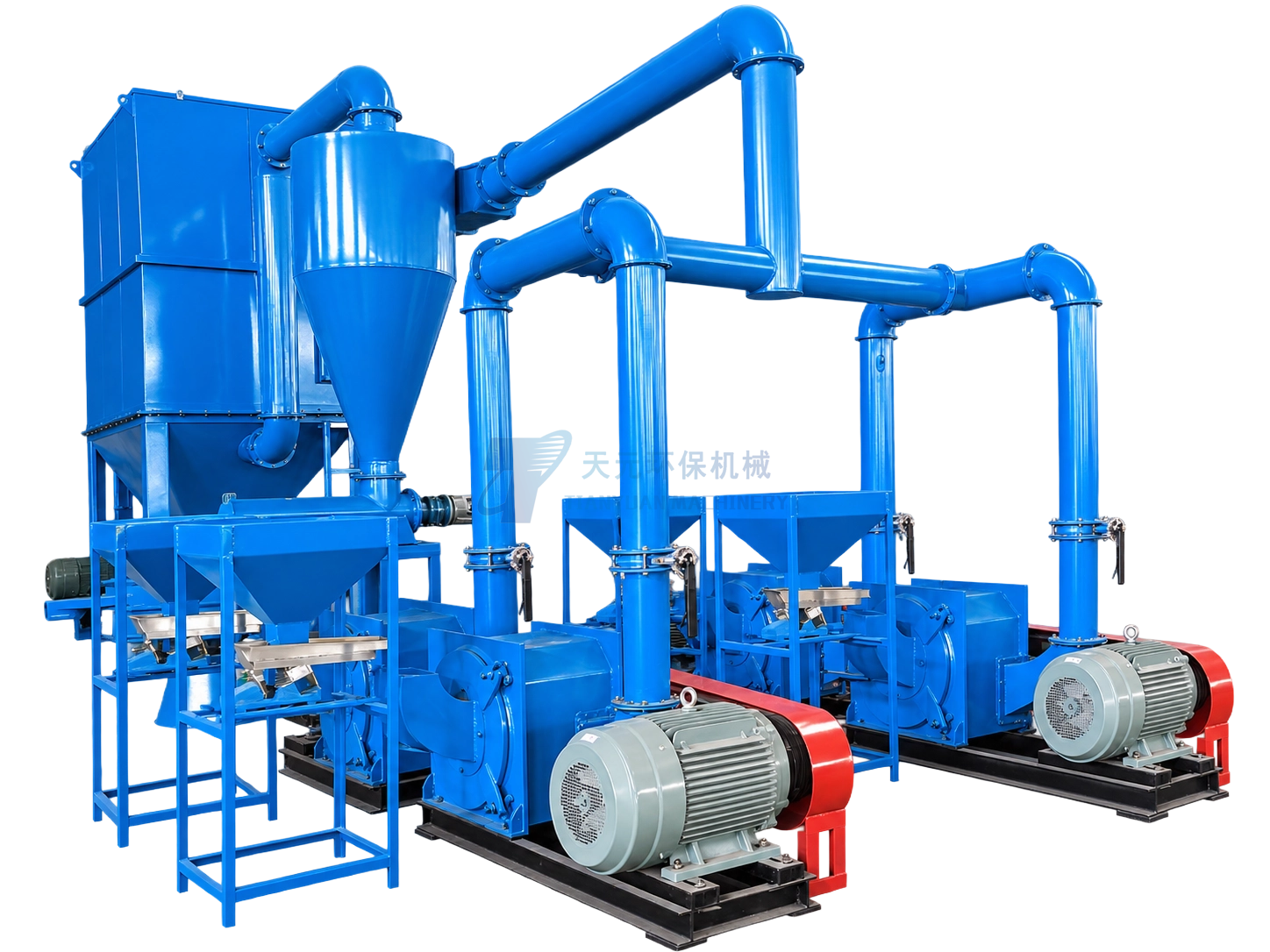
Different metal materials vary significantly in terms of hardness, toughness, thickness, and form; therefore, actual processing capacity and output quality must be determined based on the specific raw materials. Tianyuan can select equipment and evaluate processes based on the types of metals, raw material sizes, target output sizes, and production capacity requirements provided by customers, and can integrate these with Metal Powder Grinding Mills, conveying, screening, and powder collection equipment to form a complete metal powder processing production line.
Core FeaturesEquipment characteristics
- Dual-shear system, tangle-resistant and highly efficient crushingBy utilizing high-precision moving and stationary blades to create a micro-gap for relative shearing, the system delivers exceptional “gripping and cutting” capability for lumpy metal chips, long steel shavings, and tangled materials generated by lathes, thoroughly resolving the common issues of tangling and machine jams associated with traditional equipment.
- Precise material control via screen mesh, with freely adjustable particle sizeEquipped with high-strength, replaceable screens at the bottom, the machine allows for precise control of the final output’s particle size and fragment length by switching between screens with different mesh sizes, thereby meeting the strict particle size requirements of various smelting, baling, and recycling processes.
- Heavy-duty, integrated, earthquake-resistant housingFeaturing a monolithic welded structure made of high-strength, thickened steel plates and precision-machined entirely by CNC, the equipment offers exceptional structural rigidity. It effectively absorbs the impact forces generated by continuous shearing, ensuring long-term, stable operation.
- High-Strength Alloy Wear-Resistant Cutting ToolsThe core cutting tools are made from high-quality imported or specialty alloy steels (such as Cr12MoV, D2, or high-chromium alloys) and undergo deep cryogenic heat treatment and quenching processes, resulting in sharp edges that are wear-resistant and impact-resistant. The tools support out-of-machine adjustment and edge regrinding, significantly extending service life and reducing maintenance costs.
- Intelligent Overload Reversal ProtectionEquipped with an industrial-grade PLC intelligent control system, the system automatically activates a “stop—reverse—forward” overload protection mechanism when encountering excessively thick or non-shearable materials, effectively protecting the motor, gearbox, and core spindle.
- External Bracket/Hydraulic Screen: Faster Screen Changes and Material RemovalThe screens are secured using either external brackets or a hydraulic drive system, combined with an anti-loosening fastening mechanism, allowing a single operator to quickly remove them for cleaning or to replace screens with different mesh sizes. This design is particularly well-suited for operations involving frequent changes between multiple types of metal materials.
- Low-speed, low-noise, and environmentally friendly operationLow-speed shear operation delivers extremely high torque output, significantly reducing noise and dust dispersion compared to traditional impact-type equipment; under normal operating conditions, no additional dust collection system is required. For special operating conditions—such as extremely dry environments, oily conditions, or high-smoke environments—a standalone pulse-jet dust collection system can be flexibly configured.
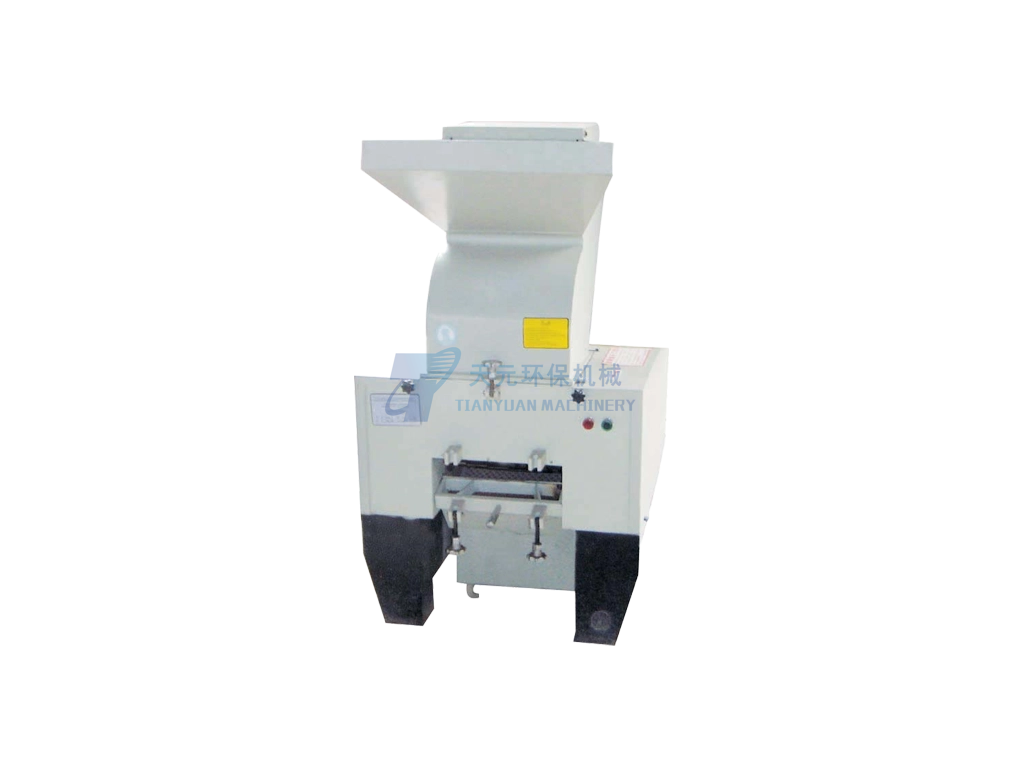
Applications & Project AssessmentSuitability criteria
This information supports a preliminary suitability assessment. Final configuration must be confirmed from the material condition, target specifications, and site conditions.
- Feed Condition
- High-tensile, easily tangled scrap metal, as well as lightweight, thin scrap metal and aluminum alloy scrap
- Feed Size
- ≤50mm
- Output Fineness
- 3-20mm
- Capacity
- 0.05–1 t/h (depending on model and material condition)
Potentially Suitable Applications
Materials
- Machining Waste: Long, clumpy iron, aluminum, copper, and steel shavings produced by lathes, as well as planer shavings (extremely high cutting and volume-reduction efficiency)
- Lightweight and Thin-walled Containers: Used soda cans, Red Bull/Lulu cans, metal packaging drums, paint cans, etc.
- Aluminum alloy scrap: scrap from thermal break aluminum profiles, cut-off pieces from aluminum extrusions, scrap aluminum alloy doors and windows, and stamping scrap from aluminum sheets, etc.
- Miscellaneous scrap metal: scrap thin sheet metal, metal stamping scraps, metal casings from small appliances, etc.
Industries
- Scrap Metal Recycling and Processing Plant
- Scrap Steel Recycling Center
- End-of-Life Vehicle Dismantling Facility
- Aluminum Extrusion Plant
- Machinery Components and Precision Machining Workshop
Conditions Requiring Further Review
- Oil content
- Moisture Content
- Flammable and Explosive
- Special Environmental Requirements
For unusual materials or operating conditions, contact us for a project-specific assessment and equipment selection.
Working Principle & ComponentsProcess and construction
Biting and Shearing: Scrap metal enters the inlet. Driven by the high torque of the main shaft, the rotating cutter disc and the stationary blades in the machine chamber generate high-intensity biting and relative shearing forces.
High-Frequency Cutting and Recirculating Grinding: The feed material is instantly cut and torn apart within the extremely narrow shear gap between the moving and stationary blades; material that has not yet reached the desired output size continues to circulate within the chamber for further shearing.
Screen Filtration and Discharge: The crushed metal fragments roll across the screen surface; material meeting the set mesh size quickly falls through the discharge port, ensuring a highly uniform particle size distribution. The discharge port can be seamlessly connected to a magnetic separation conveyor belt (enabling efficient separation of iron, aluminum, and copper); under special operating conditions, it can also be linked to an independent dust and mist collection system.
Technical ParametersSpecifications
| Equipment Models | TYPC180 | TYPC300 | TYPC400 | TYPC500 | TYPC600 | TYPC800 | TYPC1000 |
|---|---|---|---|---|---|---|---|
| Cutter Disc Diameter (mm) | 160 | 240 | 270 | 280 | 350 | 410 | 410 |
| Number of cutting blades (pieces) | 9 | 9 | 12 | 15 | 18 | 24 | 30 |
| Number of Fixed Blades (pieces) | 2 | 2 | 2 | 2 | 4 | 4 | 4 |
| Fixed Blade Length (mm) | 180 | 300 | 400 | 500 | 600 | 800 | 1000 |
| Equipment Power (kW) | 2.2 | 5.5 | 7.5 | 11 | 15 | 22 | 37 |
| Feed Opening Size (mm) | 180×125 | 320×200 | 420×220 | 520×260 | 600×240 | 800×480 | 1000×580 |
| Production Capacity (t/h) | 0.05–0.2 | 0.1–0.3 | 0.2–0.4 | 0.3–0.5 | 0.3–0.6 | 0.5–0.8 | 0.8-1 |
| Equipment Dimensions (m) | 0.73×0.44×0.9 | 1×0.8×1.2 | 1.1×0.9×1.3 | 1.2×1×1.4 | 1.3×1.1×1.7 | 1.6×1.3×2.1 | 1.8*1.7*2.2 |
Actual configuration and capacity depend on the material, feed condition, target fineness, and site conditions. Refer to the confirmed project documents.
Tell Us About Your Material and Processing Requirements
Share the material form, feed size, moisture, target fineness and required capacity so we can evaluate equipment suitability.
- Material Suitability Review
- Equipment Recommendations
- Process Design Support
- Supporting System Configuration
- Prompt Quotation
- International Service