The feed size effect on wood grinding concerns material at the actual fine-mill inlet—not the original log diameter, an upstream screen opening or the finished mesh grade. Even with the same material name, oversize pieces, elongated fragments, fine fractions and variation can change how the feed behaves.
Key answer: First meet the model’s permitted size and shape conditions, then control distribution and variation. Do not hide oversize behind an average, and do not assume that finer preparation always lowers total cost. Compare routes at the same accepted product specification with clearly defined mass and energy boundaries.
Contents
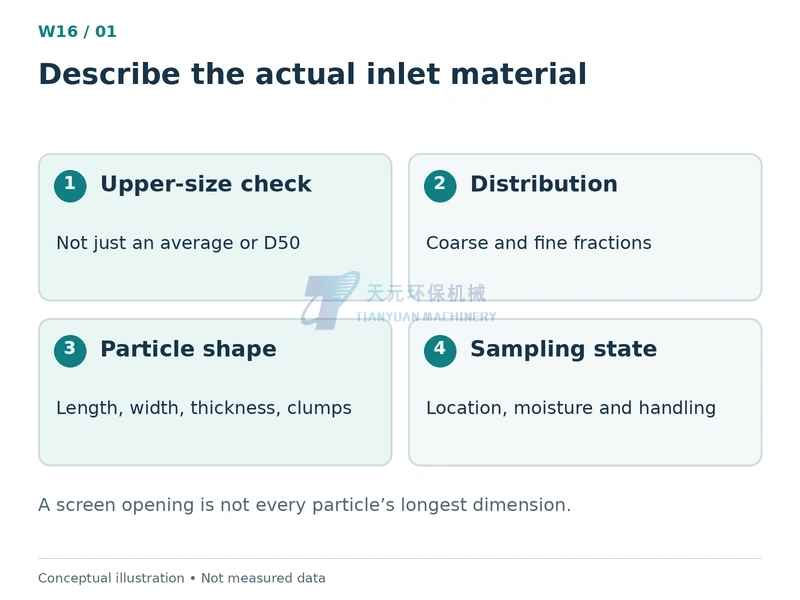
Describe more than one feed-size number
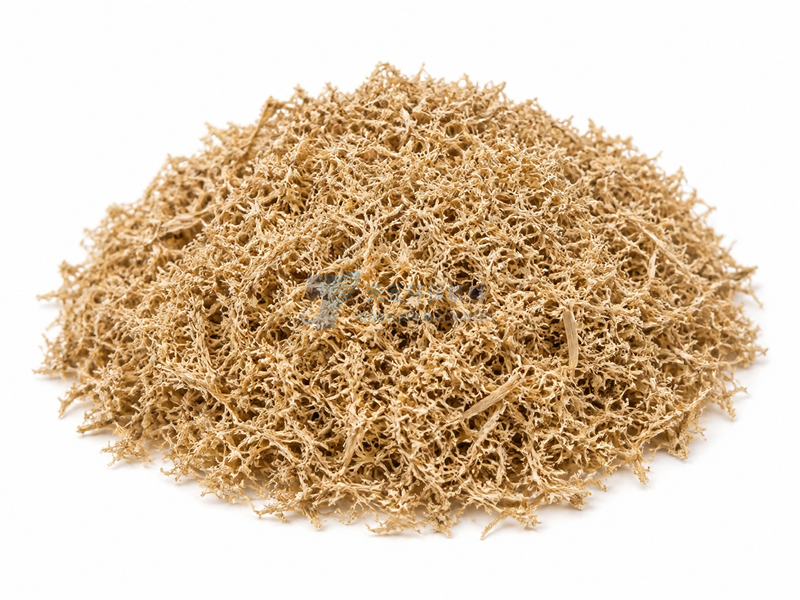
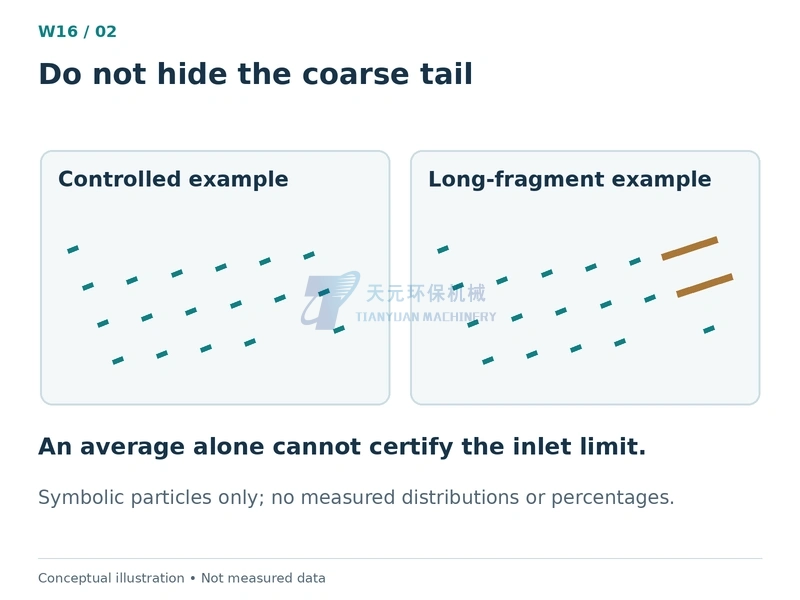
Record the sampling location, size-measurement method, maximum-dimension check, coarse and fine fractions, elongated pieces, clumps and material condition. A screen opening describes the screen; it does not automatically define the longest dimension of every fibrous particle that passes.
An average or D50 describes only part of a distribution. When using D50, state the method and whether the distribution is by mass, volume or number. A D50 below the inlet limit does not establish that every particle complies. Long-fragment and shape checks may still be needed.
Check the coarse tail and feeding variation separately
Within a permitted operating range, larger feed changes the remaining size-reduction duty. The result also depends on species, fibers, moisture, feeding and classification. Long or inconsistent fragments may contribute to intermittent delivery; inspect the real feed stream before assigning every fluctuation to the fine mill.
Jiang and colleagues’ 2017 study investigated feed size and moisture in a specific fine-milling system. It supports treating these as comparison variables, not transferring its vibratory ring-and-puck mill’s fineness, duration or energy to Tianyuan.
Resolve material outside permitted conditions upstream; do not deliberately feed oversize to generate comparison data. For TYMF6R-600, the confirmed maximum feed diameter is ≤5 mm. That is an inlet condition, not a direction to make every particle exactly 5 mm or a proven optimum for all materials.
Smaller feed does not automatically reduce whole-line cost
Extra preparation may reduce some work in the fine mill while adding upstream energy, handling or fine-material load. Judge the balance at the same accepted product requirement, rather than treating a lower fine-mill current as proof of a cheaper process.
Define the electrical-energy boundary before comparing
For a stated boundary, use the accounting definition e_el = (E_pre + E_mill + E_aux) / m_accepted. Each E is electrical energy in kWh within the same measurement window; m_accepted is accepted product mass in tonnes on a declared mass/moisture basis. The result is kWh/t, not a measured Tianyuan performance value.
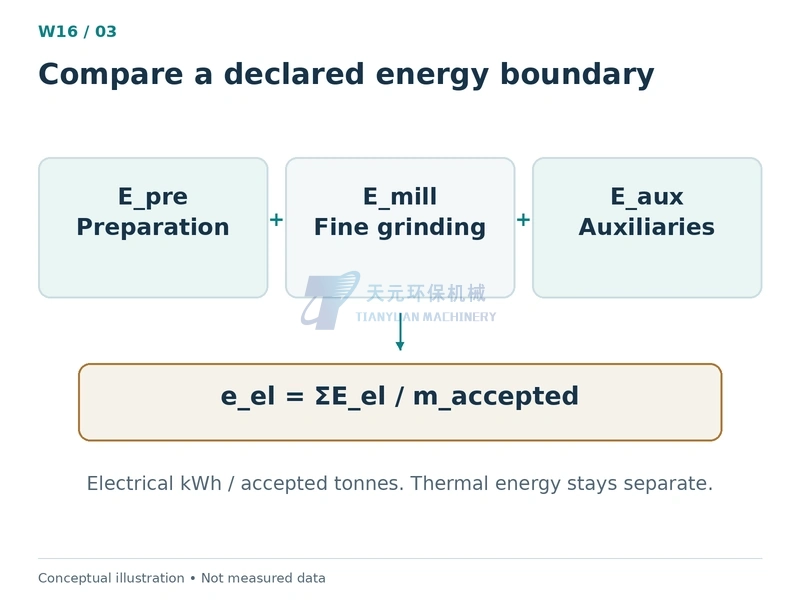
Do not add submeter consumption again if already included in a total meter. State whether startup, idle running, classification, conveying and dust collection are included. Account for significant inventory changes or choose a stable comparable window. Report thermal energy or fuel separately with its units; do not add an unexplained heat-use number to electrical kWh.
The 2018 staged-grinding study by Wang and colleagues illustrates studying combinations of stages. It does not supply a universal best feed size for this model.
Compare feed sizes under controlled, permitted conditions
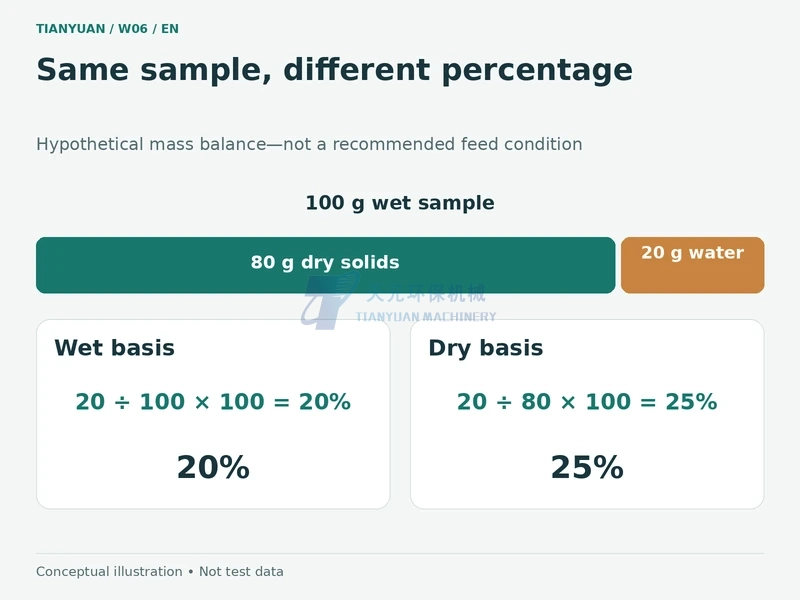
Prepare alternatives within the equipment’s confirmed limits. Match source, species, moisture basis, product target and configuration as far as practicable; record necessary changes. Changing species, moisture and final fineness together cannot isolate the effect of inlet size.
| Comparison area | Record | Misinterpretation to avoid |
|---|---|---|
| Material condition | Source, species, moisture basis and preparation | Treating different materials as a size-only comparison |
| Size and form | Method, upper-size checks, distribution, long pieces | An acceptable mean hides oversize |
| Stability and quality | Feed interruptions and product acceptance | Material entering the mill equals accepted production |
| Mass and time | Fresh feed, return, accepted powder, inventory, time window | Counting circulating material as new output |
| Energy scope | Measured electrical energy, included equipment; heat separately | Using current as energy or omitting pretreatment |
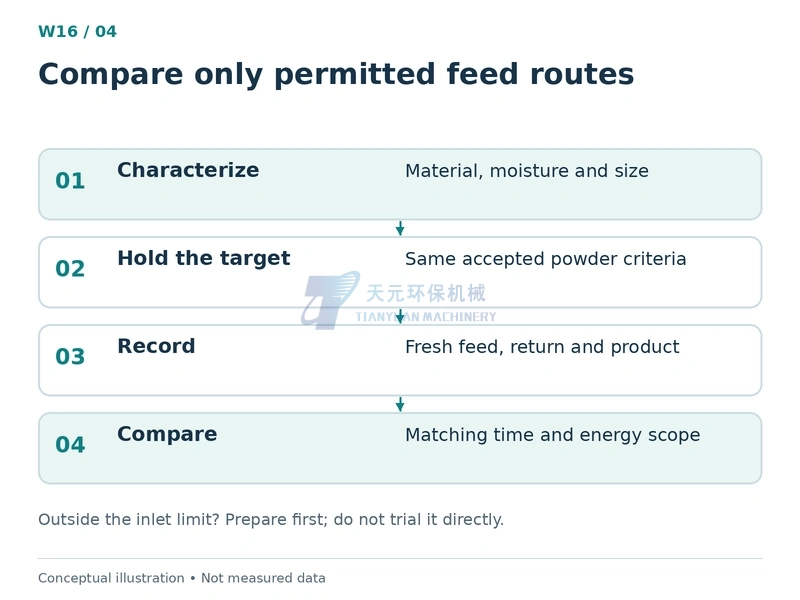
Agree duration, repetitions and sample quantity from the test purpose. If feed or classification settings must change to hold product quality, document this and call it a route-performance comparison rather than a fully isolated single-variable experiment. Use the grinding-test preparation guide to define that scope.
Turn the feed condition into an executable handover specification
Specify where to sample, how to check maximum dimensions and distribution, how to identify long pieces and clumps, where nonconforming material goes and which confirmed equipment requirements govern release. Separate feed acceptance from finished-powder acceptance: passing an inlet-size check does not establish product mesh, yield or output.
Moisture and size can change together. Follow the moisture-basis guide rather than assuming one universal best moisture level. The broader upstream-to-downstream route is already covered in the wood-chips-to-wood-flour process article; this article focuses on the inlet-size comparison.
Keep model limits and dust assessment in the decision
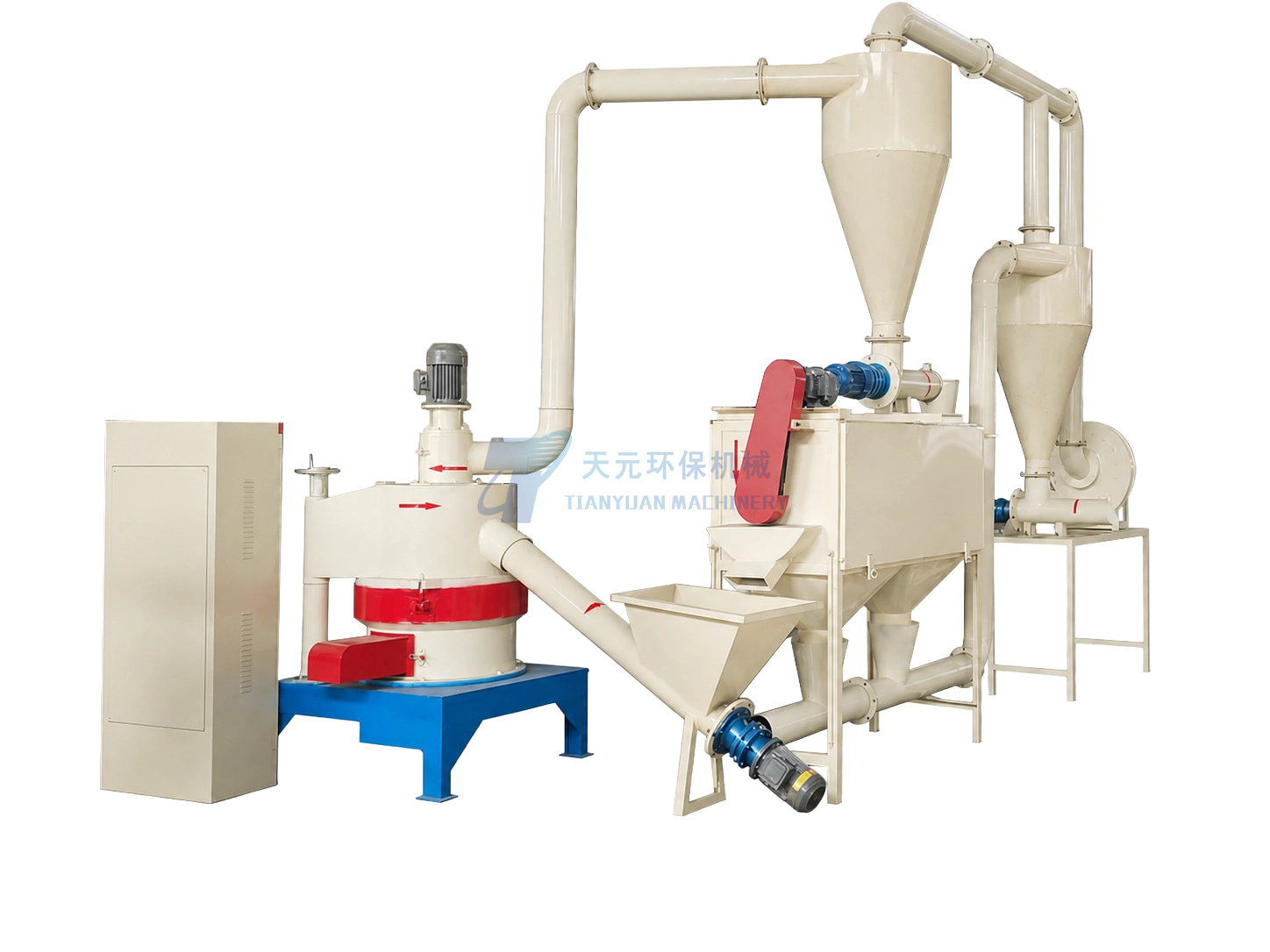
The TYMF6R-600 is for downstream fine grinding of assessed, prepared woody or plant-fiber feed. Its confirmed range is 30–325 mesh, 100–500 kg/h and maximum feed diameter ≤5 mm. The highest fineness and highest capacity are not guaranteed together; actual capability depends on material, feed condition, target fineness and site conditions. Do not extend these parameters to other models or upstream equipment.
OSHA’s woodworking guidance identifies fine wood dust as a fire/explosion concern. When preparation changes the dust fraction, review whether the material- and site-specific professional assessment still covers the new condition. Ordinary extraction and grounding are not complete protection, and smaller particles are not automatically safer.
Frequently asked questions
Does D50 below 5 mm prove acceptable TYMF6R-600 feed?
No. A median cannot prove that every particle is below the upper limit. Shape, long fragments, moisture and cleanliness still require the appropriate checks.
Does smaller feed always increase output?
No. Feeding, material condition, classification, target fineness and other bottlenecks can govern accepted output.
Is 5 mm the optimum feed size?
No. It is the model’s confirmed maximum feed diameter, not a universal operating optimum. Evaluate alternatives within permitted conditions.
Does lower mill current demonstrate whole-line energy savings?
No. Use measured electrical energy, accepted product mass, matching time windows and a declared system boundary including necessary preparation.
Should oversize be fed briefly to test the difference?
Do not exceed confirmed equipment conditions. Resolve oversize in preparation and compare only permitted feed alternatives.
Conclusion
Feed-size control means an admissible upper limit, a controlled distribution and reliable delivery—not “as small as possible”. Separate fresh feed, return material and accepted product, and compare the full declared energy boundary at equal product quality before deciding that more preparation improves the project.