
Hardwood and softwood are useful trade descriptions, but they are not machine-capacity ratings. To produce wood flour, identify the species and condition of the feed before deciding whether one material is easier to grind or can replace another.
Key conclusion: the botanical groups differ in wood organization, but grinding performance must be compared under defined conditions. Species, density, moisture, feed form and product requirements matter together. “Hardwood always grinds harder” and “softwood always uses less energy” are not defensible guarantees.
Contents
Botanical classification is not a hardness test
In botanical terms, hardwoods are angiosperm woods; softwoods are gymnosperm woods, commercially dominated by conifers. The USDA reference on wood structure describes this distinction. The groups are not separated by a universal mechanical-hardness threshold, so their names cannot establish a density or grindability ranking.
Use a recognizable species name, source and controlled mixture description in the feed record. “Hardwood sawdust” alone can hide substantial changes between supplies. Likewise, identifying a material as softwood does not specify its moisture, extractives or contamination.
What does wood organization tell you?
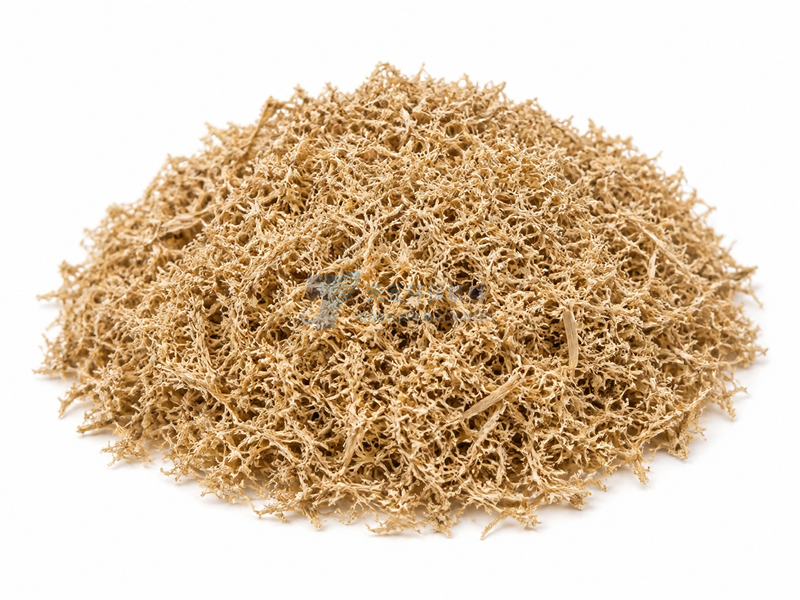
Softwood structure is generally dominated by tracheids; many hardwoods contain distinct vessels and fibers. That anatomical contrast, described by USDA, is a reason to treat wood as a structured material rather than a uniform brittle solid. The conceptual diagram is not a micrograph or a scale comparison of actual species.

The way feed was cut, torn or previously reduced also matters to the comparison. Record whether it is chips, sawdust, shavings or another prepared fraction. Inspect the resulting particles instead of assuming that the same screen or machine setting produces an identical shape in both materials.
Do not turn group descriptions into universal chemical claims. Not every softwood has the same resin content, and not every hardwood has identical anatomy. Identify the actual feed where extractives or adhesion are relevant to the process.
Separate species identity from operating conditions
Before comparing performance, distinguish the material description from the conditions of the trial. Record species or controlled blend, bark and contamination; measure feed dimensions and moisture; then record feeding behavior and operating settings.
Use compatible wet- or dry-basis moisture measurements. The USDA moisture reference explains why an unspecified percentage is incomplete. Two batches with the same printed percentage but different calculation bases are not a matched comparison.
Density deserves attention, but solid-wood density, feed bulk density and flour bulk density are not interchangeable. Equal hopper volumes do not imply equal feed masses. This article does not assign one density or energy ranking to either botanical group.
Compare the same accepted product, not just the same hopper
Set one intended use, particle-size acceptance method and target product before testing the identified feeds. Keep preparation and feed ranges comparable. If different settings are required to make the same accepted product, document those changes rather than describe the settings as identical.

Useful comparison endpoints include accepted-product mass flow, particle distribution, particle shape, final moisture, recycle behavior and cleaning requirements. State the measurement basis and operating time. “Minutes to empty a hopper” is not an adequate substitute for accepted mass output.
For energy, identify which equipment is metered and the mass basis of accepted product. A published Douglas-fir comminution study demonstrates why equipment and feed conditions belong in the record; its numerical results are not Tianyuan guarantees. A valid comparison should say what was kept constant, what changed and what remained unmeasured.
Can one wood source replace the other?
Reaching a particle-size target does not by itself establish interchangeability. Color, shape, composition and formulation performance may still need separate acceptance. USDA’s Wood Flour chapter links species selection to intended use, which supports evaluating a substitution in the actual downstream application rather than relying only on mesh.
For purchasing control, identify permitted sources, blend rules, contaminant exclusions and the notification process when supply changes. Unknown coated, glued or mixed recycled feed should not receive approval solely because it can be described as hardwood or softwood.
A blend should also remain identifiable. An unrecorded change in mixture makes it difficult to distinguish a process change from a raw-material change when powder quality moves outside the agreed requirement.
Tianyuan process judgment: test the feed and the target together
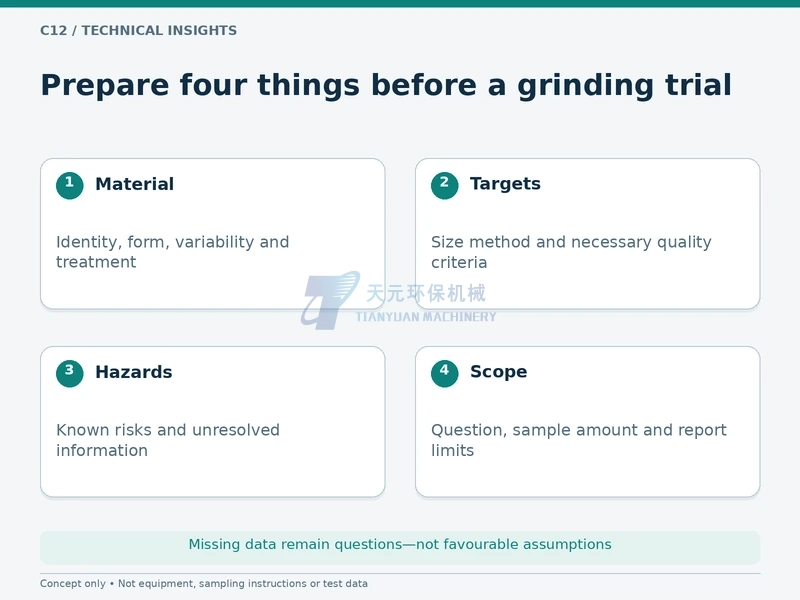
For a Tianyuan project, use a sequence of identified species and feed condition, measurable quality objectives, representative material and a controlled evaluation. The grinding-test preparation guide sets out the information needed before discussing a trial. It is more useful than requesting a capacity from the botanical category alone.
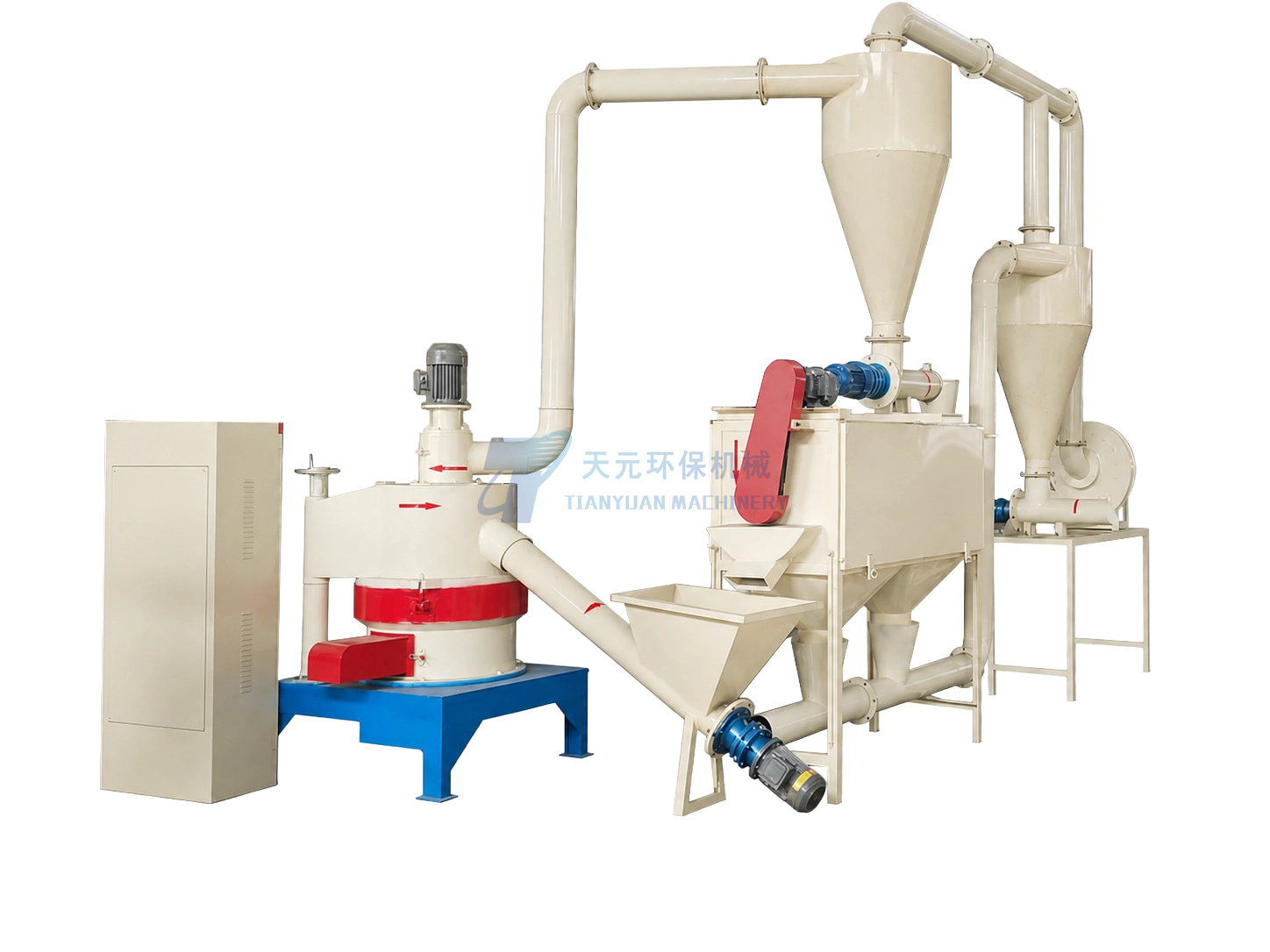
The TYMF6R-600 is a downstream fine mill for prepared woody or plant-fiber material, not a primary log crusher. Its confirmed range is 30–325 mesh, 100–500 kg/h and maximum feed diameter of 5 mm. Actual performance depends on material, feed state, target fineness and site conditions. These are model-specific ranges, not the same guaranteed output for all hardwoods and softwoods at the finest setting.

Both feed categories still need dust controls and a suitable safety assessment. HSE wood-dust guidance and fire/explosion guidance do not support treating the label “softwood” as a reason to omit protection. Ordinary dust collection and grounding are not a complete fire- or explosion-protection design.
FAQ
Is hardwood always harder to grind than softwood?
No. The category does not replace a check of species, moisture, feed form, equipment and target product.
Does every softwood contain more resin than every hardwood?
No. Group names are insufficient for that claim. Identify the actual species and source, and assess relevant constituents where necessary.
Can powders with the same mesh automatically be mixed or substituted?
No. Check shape, moisture, cleanliness and application requirements as well as particle size.
Is using exactly the same setting always the fairest comparison?
It is one test design, not the only one. For production selection, also compare conditions that achieve the same accepted product, documenting any required setting changes.
Does a mill’s maximum output apply to every species?
No. A published model range is not a guarantee for every feed or for the finest product at maximum throughput.
Conclusion
Hardwood and softwood labels help describe the feed but do not decide grinding performance. Base the process choice on the actual species and feed state, a comparable trial and the accepted powder specification. That produces a defensible decision without treating botanical names as performance data.